Virtual Reality Overlays Reshaping Multi-Player Decision Chains in Regulated Online Blackjack Arenas

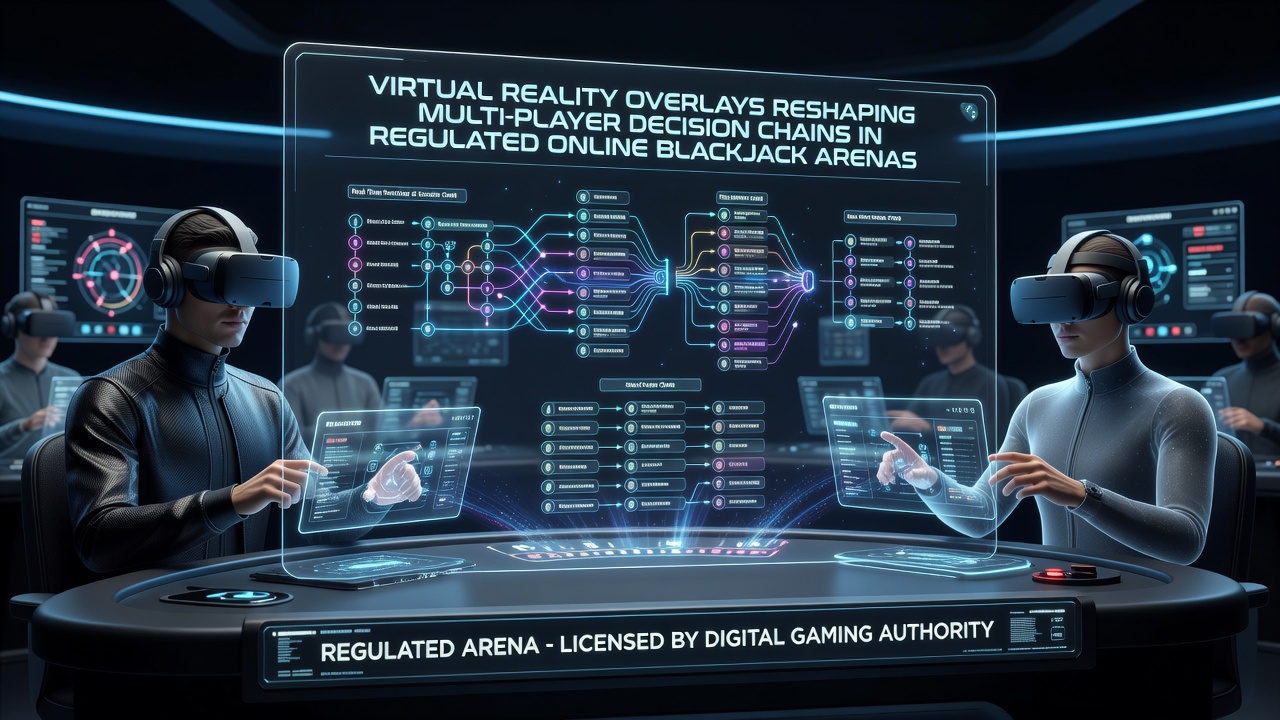
Virtual reality overlays have entered regulated online blackjack platforms through layered visual interfaces that display real-time probability data, player position indicators, and shared strategy cues directly within the immersive environment. These systems connect multiple participants across different locations while maintaining compliance with jurisdictional requirements that govern information display and betting synchronization. Developers integrate the overlays with existing game engines so that decision prompts appear as translucent panels floating above the virtual table surface.
How Overlays Alter Group Decision Sequences
Multi-player decision chains in blackjack involve sequential choices where one participant’s action influences the options available to others at the same table. VR overlays insert visual markers that highlight possible moves such as hit, stand, or split while showing aggregated data from previous rounds. The technology processes inputs from all connected players simultaneously and renders updated overlays within milliseconds, which shortens the time between one player’s action and the next. Regulated operators in several markets have tested these features under controlled conditions to verify that the added visual layer does not alter the underlying random number generation or payout calculations.
Observers note that participants using the overlays tend to reference the shared visual cues when coordinating responses to dealer cards. Data collected during pilot programs in 2025 showed measurable reductions in average decision latency across tables with four or more players. The overlays also flag regulatory thresholds, such as maximum bet limits per hand, by dimming prohibited options in the visual field. This approach keeps individual choices private while allowing group awareness of table-wide constraints.
Regulatory Frameworks Supporting Overlay Integration
Jurisdictions including those overseen by the New Jersey Division of Gaming Enforcement and the Alcohol and Gaming Commission of Ontario have issued technical standards that address overlay functionality. These standards require operators to separate overlay data streams from core game logic so that external information cannot influence card distribution. Testing protocols evaluate whether the visual elements introduce latency that could disadvantage any participant. As of July 2026 several licensed platforms have received approval for limited deployment after demonstrating compliance with these separation requirements.
Industry reports from the European Gaming and Betting Association indicate that overlay systems undergo third-party audits focused on data integrity and player protection measures. Auditors examine how the software handles simultaneous inputs from multiple users and whether the displayed information remains consistent across all headsets. Approved systems must log every overlay interaction for review by regulators, creating an audit trail that links visual prompts to specific player accounts.
Technical Components Behind the Overlays
The core architecture combines spatial computing frameworks with secure multiplayer servers that synchronize state across headsets. Each overlay layer receives encrypted packets containing table status, individual card values, and regulatory flags. Rendering engines then translate these packets into three-dimensional annotations visible only to the authorized user. Developers employ low-latency protocols to ensure that decision prompts appear before the next player’s turn begins. Hardware requirements include headsets with sufficient field-of-view resolution to display fine text without causing eye strain during extended sessions.
Research conducted at institutions such as the University of Nevada, Reno has examined how spatial positioning of overlays affects player attention distribution. Findings show that placing probability indicators near the virtual dealer’s hand reduces the need for head movement while keeping critical information within the primary visual field. These placement guidelines have been incorporated into design specifications used by approved platform operators.
Impact on Tournament and Cash-Game Formats
Tournament structures that rely on synchronized betting rounds now incorporate overlay timers that count down visible to all participants. The shared countdown reduces disputes over turn order because every headset displays the same elapsed time. Cash-game tables use overlays to show aggregate table statistics without revealing individual holdings, which preserves game integrity while giving players context for their own decisions. Licensed sites in Australia have documented increased table occupancy after introducing these synchronized displays, according to figures released by state gaming authorities.
Operators maintain separate control panels for staff that allow real-time adjustment of overlay visibility. When a table reaches capacity or when regulatory alerts trigger, administrators can toggle specific elements without interrupting ongoing hands. This flexibility supports compliance during live audits and helps operators respond to player reports of visual inconsistencies.
Conclusion
Virtual reality overlays continue to integrate into regulated online blackjack environments through measured technical and compliance steps. The systems modify how multi-player decision chains unfold by providing synchronized visual context while respecting jurisdictional rules on data separation and auditability. Ongoing testing in approved markets supplies operators and regulators with performance metrics that guide further refinements. As deployment expands, the focus remains on maintaining game fairness and transparent record-keeping across all connected sessions.