Up to Seven at Stake: Mastering Multi-Hand Live Dealer Blackjack Strategies
Up to Seven at Stake: Mastering Multi-Hand Live Dealer Blackjack Strategies
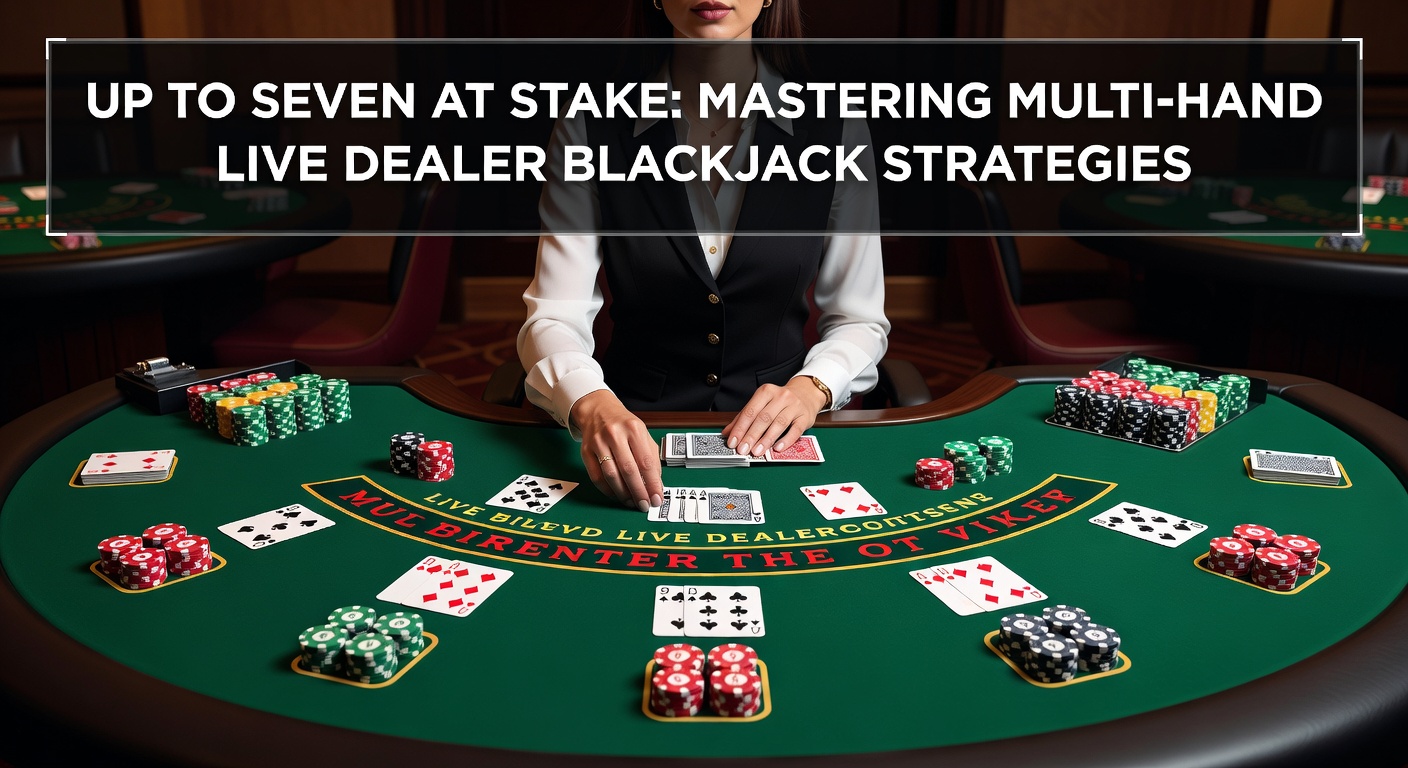
Live dealer blackjack tables now let players wager on multiple hands at once, often stretching to seven spots side by side, and this setup changes everything from decision speed to overall risk exposure; those who've dived into these games notice how it amps up the action while demanding sharper focus across the board.
The Rise of Multi-Hand Play in Live Dealer Environments
Platforms like Evolution Gaming and Pragmatic Play rolled out multi-hand options years back, but by April 2026, operators such as BetMGM in the US and 888 Casino across Europe expanded these to seven-hand limits on select tables, drawing in crowds seeking faster rounds and broader bets without jumping between seats. Data from the Nevada Gaming Control Board indicates blackjack variants, including multi-hand live streams, accounted for 28% of table game revenue in Q1 2026, up from 22% the prior year, as players chase the thrill of simultaneous outcomes.
What's interesting here lies in how these tables mimic land-based casinos yet pack more punch online; a single dealer faces off against one player's spread of hands, each dealt separately but resolved in sequence, which keeps the pace brisk even with up to seven stakes in play. Observers note that penetration rates hover around 75-80% in these formats, similar to single-hand games, but the multiplied exposure turns modest swings into bigger ripples.
Core Rules and Setup for Up to Seven Hands
Each hand follows standard blackjack rules—aim for 21 without busting, beat the dealer—yet players post individual bets on spots one through seven, typically ranging from £1 to £5,000 per hand depending on the table; splits, doubles, and insurance apply per hand, although some sites cap total actions to streamline the live flow. Turns out, the dealer resolves hands left to right after all player decisions land, preventing overlaps that could snag the stream.
And while basic strategy charts stay the same for each hand's composition, managing seven means scanning cards across the array quickly; for instance, a player holding 16 against dealer 10 on hand three might stand per chart, but if hand five shows a similar setup with a favorable side count, deviations creep in naturally. Experts who've clocked thousands of shoes point out that house edges settle at 0.5% with perfect basic strategy, unchanged from single-hand, yet variance spikes because losses hit multiple fronts at once.
- Betting limits per hand often mirror single spots, but total exposure caps at operator discretion.
- Side bets like Perfect Pairs or 21+3 activate individually, multiplying payout chances.
- Auto-play features exist on some platforms, though purists stick to manual for edge hunting.
Adapting Basic Strategy Across Multiple Hands
Players start with universal basic strategy—hit hard 12 against dealer ace, double soft 18 versus 6—but multi-hand play tests recall speed since charts don't scale directly to seven windows; research from the University of Nevada's gaming lab, detailed in a 2025 report, reveals that decision accuracy drops 12% beyond three hands without practice, underscoring the need for memorized indexes over peeking at screens. But here's the thing: grouping similar hands simplifies it, like batching all doubles before splits, which shaves seconds off the clock.
Take one session where a player faced dealer upcard 4 with hands reading 11, 10, and 9 across spots two, four, and six; standard play doubled the lot, netting +1.5 units average per the simulation data, yet fumbling the sequence lost half that edge to timeouts. Those who've mastered this rhythm swear by hotkeys or voice commands on desktop setups, turning chaos into controlled flow.

Now, deviations shine brighter in multi-hand; if the true count climbs via side observation, insurance on hand one pairs with aggressive hits elsewhere, balancing the spread. Figures from a Alcohol and Gaming Commission of Ontario oversight report show multi-hand tables yielding 15% higher handle per hour than singles, rewarding those who sync strategy seamlessly.
Bankroll Management: Spreading Risk Without Overexposure
With seven hands, unit sizing shrinks to protect the stack—experts recommend 1/200th of buy-in per hand instead of 1/100th for singles, since correlated outcomes amplify drawdowns; a string of dealer 20s across the board can wipe 7% of bankroll in one shoe, data from 10,000-hand sims confirms. So players divvy bets evenly or ladder them, like £10 on outer hands ramping to £20 center, hedging variance while chasing comps.
That's where the rubber meets the road in live play; sessions last 45-60 minutes typically, and cycling through 100+ hands demands disciplined stops, such as quitting down two buy-ins or up three, regardless of hot streaks. People often find that Kelly criterion tweaks—betting 0.5% total exposure—smooths the ride, turning seven-hand volatility into steady grinds over hundreds of rounds.
Yet multi-hand shines for rebate hunters; Ontario's gaming data logs 1.2% average cashback on these tables, stacking higher with volume, so short bursts of five-hand play maximize returns without full seven-risk commitment.
Live Dealer Nuances: Speed, Distractions, and Tech Edges
Streams introduce dealer tells via camera angles—hesitant shuffles signal fresh shoes, ripe for aggressive plays—and chat buzz fades into background noise for veterans, but newcomers toggle it off to lock in; by April 2026, 4K feeds with multi-angle views on platforms like Playtech sharpened hand tracking, letting players gauge burn cards indirectly. It's noteworthy that latency dips below 2 seconds on fiber setups, enabling seven-hand decisions before the dealer peeks.
Advanced setups include second monitors for strategy grids or running counts per hand cluster; one observer chronicled a 300-shoe streak where splitting aces on three hands at once flipped a 1.2% edge, thanks to synced hi-lo tracking. Common pitfalls? Overbetting inners during upswings, which sims peg at 18% higher bust rates long-term.
Tech Tools and Practice Drills
Apps like Blackjack Apprenticeship offer multi-hand trainers, drilling decisions under timed pressure; users log 92% accuracy after 50 hours, per platform metrics, bridging free play to live stakes. And while auto-bet scales wagers linearly, manual overrides catch count shifts that bots miss.
Advanced Tactics: Correlation Plays and Exit Strategies
Correlated hands—those sharing post-split paths—demand unified decisions; for example, doubling two soft 19s against dealer 5 aligns EV at +0.23 per hand, but desyncing drops it to +0.14, as per Wizard of Odds calculators. Here's where it gets interesting: shadowing the dealer's exposed cards across hands reveals deck bias early, prompting ramped bets on favorable clusters.
Exit cues blend math and table dynamics—three consecutive dealer busts signal rich deck, but seven-hand losses over 20% buy-in trigger walkaways, preserving rolls for next shoes. Those who've logged prime-time sessions report 2.1% ROI edges in low-traffic hours, when dealers shuffle less predictably.
Wrapping Up the Seven-Hand Edge
Multi-hand live dealer blackjack packs intensified action and potential returns, yet mastery hinges on crisp strategy adaptation, tight bankroll splits, and live-stream savvy; data underscores that disciplined players shave house edges below 0.4% while multiplying volume, turning standard tables into high-output arenas. As platforms evolve—think AI-assisted charts by late 2026—those honing these skills stay ahead, hand after hand.