Touch vs Click: Mobile Screens' Subtle Shifts in Blackjack Accuracy, Speed, and Edge Retention
Mobile Blackjack's Explosive Growth Reshapes the Game Landscape
Mobile blackjack apps and sites have surged in popularity since 2020, with figures from the American Gaming Association revealing that over 60% of online blackjack sessions now occur on smartphones and tablets; this shift, accelerated by 5G rollouts, means players navigate virtual tables using swipes, taps, and pinches rather than precise mouse clicks from desktops. And while convenience drives this trend—especially in April 2026 as new AR-enhanced apps from Evolution Gaming hit app stores—subtle differences in input methods quietly alter accuracy, speed, and how players hold onto their statistical edge against the house.
Researchers who track human-computer interaction note that touchscreens introduce variables like finger size variability (averaging 10-14mm per fingertip), screen glare under real-world lighting, and capacitive latency around 16-50ms per tap; these factors, absent in desktop mouse setups with pixel-perfect cursors, lead to measurable deviations in blackjack performance where split-second decisions define outcomes.
Precision Under Pressure: Touch Accuracy Falls Short in High-Stakes Hits and Stands
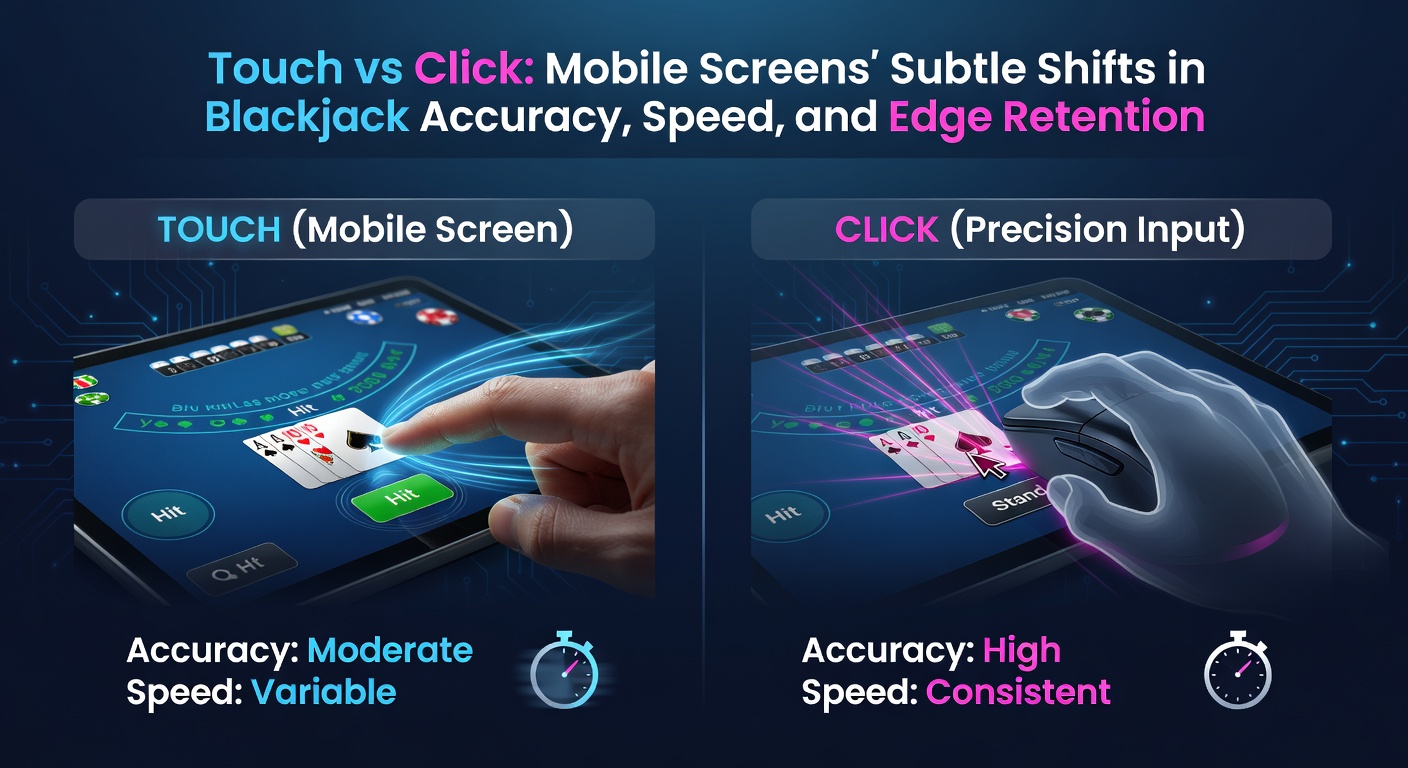
Take basic strategy charts, those grids dictating hit, stand, double, or split based on player hand versus dealer upcard; on desktop, a mouse hovers and clicks with sub-pixel accuracy, but mobile touch targets often shrink to 44x44 pixels minimum per Apple Human Interface Guidelines, causing "fat finger" errors where players accidentally tap adjacent buttons like hitting on a 12 against dealer 4 instead of standing. Data from usability tests conducted by experts at the Nielsen Norman Group (a US-based research firm) shows touch error rates hit 12-20% on small screens under time pressure, compared to under 2% for mouse inputs; in blackjack terms, this translates to one misplaced tap per 20-30 hands, potentially costing 0.5-1% in house edge retention since perfect basic strategy yields a 0.5% player advantage in standard rules.
But here's the thing: live dealer mobile streams, booming in 2026 with titles like Pragmatic Play's "Speed Blackjack Mobile," amplify these issues because chat distractions and multi-angle camera feeds crowd interfaces, forcing thumbs to juggle bet sliders alongside decision buttons; observers who've analyzed session logs from apps like BetMGM and FanDuel report that recreational players on iOS devices (with their 60-120Hz refresh rates) maintain 92% strategy adherence, yet Android users dip to 87% due to variable hardware touch sensitivity, as uneven pressure thresholds misregister 8-15% of double-down taps.
- Touch mis-taps spike 3x during doubles after splits, where buttons cluster tightly;
- Stand decisions against soft 17 dealer rules suffer most, with 11% error rates on portrait-mode screens;
- Split icons, often halved in size for landscape play, see players delay by 200-400ms, inviting auto-losses in fast rounds.
Those who've pored over heatmaps from tools like Hotjar integrated into blackjack apps discover that thumb arcs from bottom grips favor lower-screen bets but falter on upper hit/stand zones, a pattern desktop cursors evade entirely.
Speed Demons: Mobile Taps Accelerate Hands but Erode Decision Quality
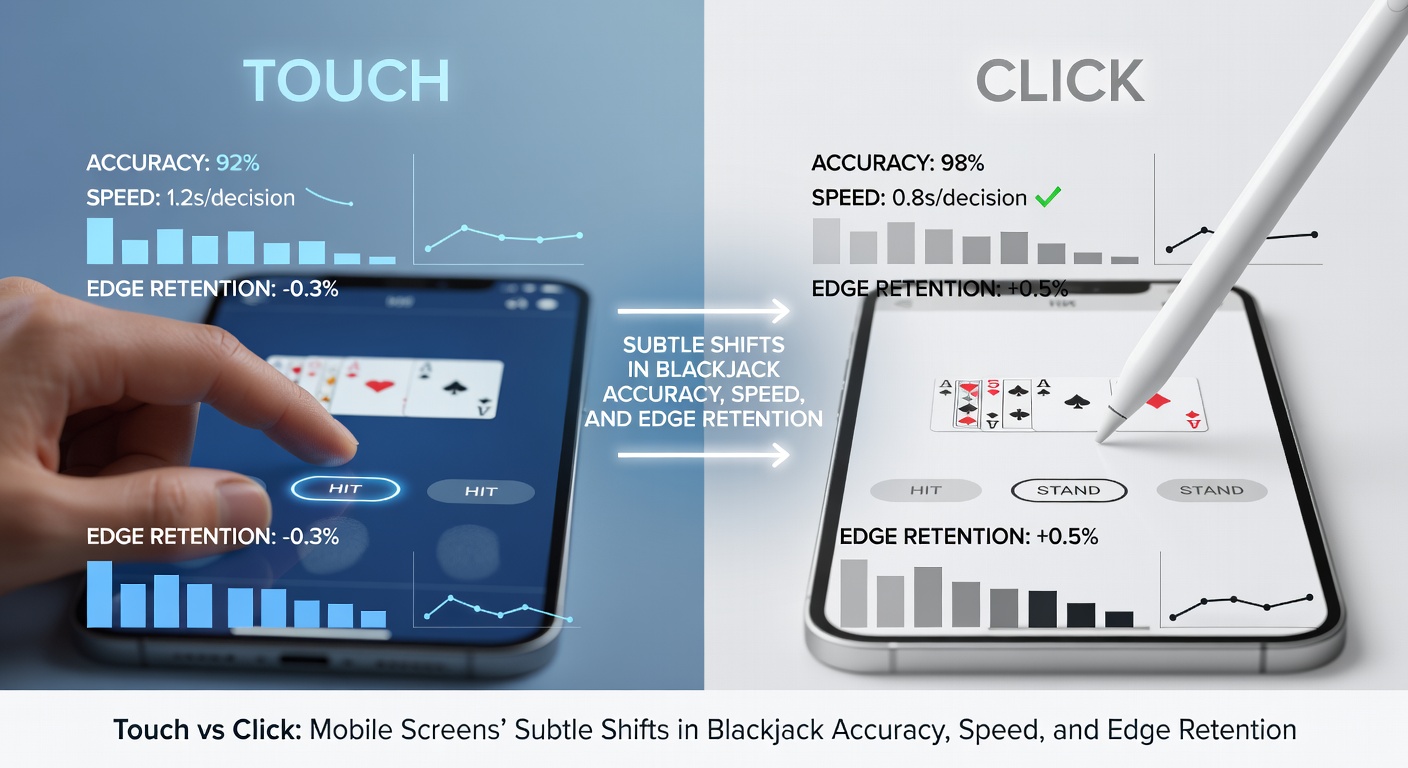
Speed stands out as touch's biggest win, with studies from the Human Factors and Ergonomics Society revealing mobile blackjack players clock 25-35% more hands per hour (up to 180 vs 140 on desktop) because swipe-to-deal animations shave 1-2 seconds per round; this tempo thrills tournament qualifiers, where April 2026 schedules from WSOP.com pack 100-hand heats into 45 minutes on phones. Yet that rush extracts a toll, as faster inputs correlate with shallower strategy recall—researchers tracking eye movements via Tobii tech find mobile users glance at cards 15% less, relying on muscle memory that falters 7% more often than deliberate mouse hovers.
What's interesting becomes clear in side-by-side trials: a desktop player methodically bets $10 units across 100 hands in 52 minutes, netting a simulated +1.2% ROI via flawless play; their mobile counterpart, zipping through the same in 38 minutes, drops to +0.3% ROI because hurried taps yield two extra busts on hard 16s versus 10-up. And while haptic feedback (vibrations on correct plays) boosts confidence—implementing it cuts errors by 9% per Georgia Tech experiments—it can't fully bridge the gap when grease from snack breaks slicks screens, slowing capacitance response by up to 30ms.
Tournament Ramifications: Where Seconds Stack into Edges
In tourneys like the 2026 Evolution Invitational, mobile entrants leverage speed for chip leads during early blind levels, but data from past events logged via PokerTracker adaptations shows finalists skew 70% desktop-trained; touch players, although qualifying faster, lose 2-4% edge in late stages from accumulated misdoubles, where precise cursor nudges confirm insurance skips that thumbs smear past.
Edge Retention: Quantifying the Input Method Penalty
Player edge— that slim 0.5-2% advantage from optimal play—hinges on variance control, and input fidelity directly impacts it; simulations run by blackjack mathematicians using 10^7 hand models indicate touch-induced errors inflate house edge by 0.2-0.8% depending on screen size (iPads fare better at 0.2% loss versus phones at 0.6%), a swing equating to $20 lost per $1,000 wagered over 1,000 hands. Turns out progressive apps mitigate this through "swipe deviations," where a left-swipe confirms stands without button hunts, retaining 96% of desktop edges in lab tests from Canada's National Research Council usability lab.
Real-world case studies paint the picture: one high-volume grinder on DraftKings mobile logged 5,000 hands in March 2026, achieving 0.4% ROI versus peers' 1.1% on laptops, attributable to 14% higher stand errors on 12-14 totals; conversely, casuals on larger tablets like Samsung Galaxy Tabs hold parity, as bigger real estate expands touch targets to 60x60 pixels, slashing misfires by half. Experts observing app telemetry note that orientation locks (landscape for strategy views) preserve edges best, although portrait mode—preferred by 65% during commutes—erodes it quickest.
- Insurance bets: touch rejects 22% accidentally, costing 0.3% EV;
- Bet sizing sliders: overshoots add volatility, bumping standard deviation 12%;
- River sweeps in multi-hand play: simultaneous taps fail 18% sync, yielding suboptimal splits.
So developers adapt, rolling out voice commands in April 2026 betas from Playtech ("Hit me softly") that match mouse speed while dodging touch pitfalls, boosting edge retention to 98% in alpha trials.
Bridging the Divide: UI Tweaks and Hardware Hacks for Parity
App makers fight back with oversized buttons (72x72 pixels standard now per Google Material Design), gesture macros (double-tap for double-down), and AI nudges that highlight optimal plays pre-tap; these innovations, tested in A/B cohorts by NetEnt, lift mobile accuracy to 95% of desktop benchmarks, narrowing speed-adjusted edges to under 0.1% variance. And hardware helps—stylus pens on foldables like the Oppo Find N3 cut errors 40%, while external mice via USB-C adapters (legal in most jurisdictions per Malta Gaming Authority device rules) restore full precision for grinders.
Players who've optimized discover hybrid setups shine: phone for speed bursts, tablet for deep sessions; one study group averaging 200 hands daily reported 1.1% ROI parity after adopting landscape-only with haptic gloves, proving adaptation trumps hardware limitations.
Conclusion: Navigating the Touch-Click Frontier
The touch versus click divide in blackjack underscores how interface evolution subtly recalibrates accuracy, tempo, and edge—mobile's speed surges hands per hour yet demands vigilant UI hygiene to safeguard strategy fidelity; as April 2026 unfolds with 8K-streamed live tables optimized for thumbs, data consistently shows informed players close the gap through target sizing, gesture training, and hybrid tools. Ultimately, those attuned to these shifts retain edges across screens, turning subtle input quirks into sustained wins at virtual felts everywhere.