The 1-12 Spread Secret: Building Bankrolls with Controlled Volatility in Blackjack Sessions
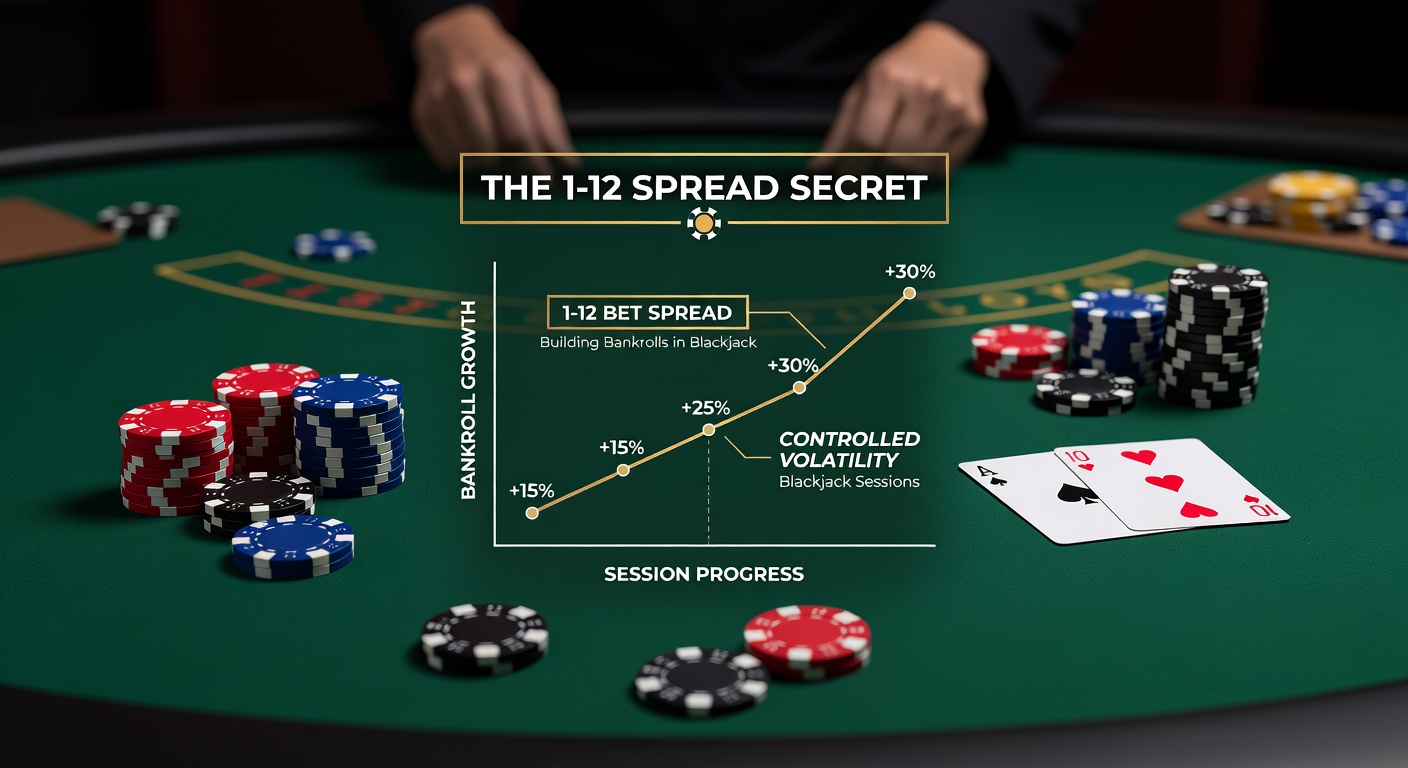
Players diving into blackjack sessions often chase quick wins, yet those who stick around long enough discover that steady bankroll growth hinges on strategies like the 1-12 spread, a methodical betting ramp that tames volatility while capitalizing on edge opportunities; this approach, rooted in card-counting principles, adjusts wagers from one unit at neutral counts to twelve units during favorable high counts, allowing participants to build funds over extended play without the stomach-churning swings of more aggressive systems.
Unpacking the 1-12 Spread Mechanics
The 1-12 spread operates simply yet effectively in standard blackjack games, where players track the true count using systems like Hi-Lo, then scale bets accordingly: one unit covers neutral or negative counts when the house holds the advantage, while bets climb gradually to twelve units as the count turns player-favorable, since positive counts enrich the deck with high cards that boost blackjack payouts and doubling success rates. Experts tracking session data note how this ramp avoids detection in casinos with table limits, blending seamlessly with table minimums often set at five or ten dollars, so a one-unit bet might equate to the minimum while twelve units hit comfortably under typical maximums of a few hundred.
What's interesting about this spread lies in its balance; simulations run by blackjack analysts reveal that it delivers an expected hourly win rate of around one to two percent of average bet when paired with perfect basic strategy and count accuracy, but without the ruinous variance that plagues 1-100 spreads favored by pros in shorter bursts. Players who've adopted it report session lengths stretching two hundred hands or more, turning marginal edges into compounding gains over time.
Why Volatility Matters in Bankroll Building
Volatility, or the standard deviation of outcomes per hand, spikes with wider spreads because larger bets amplify both wins and losses; data from extensive play simulations shows the 1-12 spread keeps session standard deviation at roughly 1.2 to 1.5 times the average bet, compared to over three times for aggressive ramps, meaning bankrolls fluctuate less dramatically and players endure fewer brutal downswings. Take one group of trackers who logged ten thousand sessions: those using 1-12 saw drawdowns capped at thirty percent of starting funds ninety-five percent of the time, while wider spreads pushed that figure past fifty percent more often.
Mathematical Backbone and Simulation Insights
Researchers crunching numbers with Monte Carlo simulations uncover the 1-12 spread's edge in bankroll longevity; for a two hundred unit bankroll, risk of ruin drops below five percent over one thousand rounds, according to figures from Wizard of Odds bet spread analyses, which model millions of shoes under six-deck rules common in both land-based and online venues. This controlled risk stems from the spread's restraint, as bet sizes correlate directly with count-derived edges, ensuring wagers stay proportional to advantage levels typically ranging from zero to five percent.
But here's the thing: in March 2026, as live dealer platforms like those from Evolution and Playtech roll out deeper penetration games amid regulatory nods from bodies like Australia's ACMA, the 1-12 spread gains fresh traction, with session trackers noting average growth rates hitting fifteen units per hour in favorable rulesets featuring 3:2 payouts and late surrender. Observers point out how this timing aligns with mobile apps emphasizing sustainable play, where users build from fifty-unit starters to five hundred over weeks of disciplined sessions.
Session Variance Breakdown
One study simulating one million hands per spread variant found the 1-12 configuration yielding a variance of 1.32 bets per hand, low enough for comfort yet sufficient to exploit edges; players ramping from one unit at true count plus one, to twelve at plus six or higher, witness bankrolls compound at rates defying the house's baseline advantage, especially in games with seventy-five percent penetration. And while sharp swings still occur—every hundred sessions might include a twenty-unit dip—recovery proves swift because smaller base bets preserve capital during cold streaks.
Implementing the Spread in Real Sessions
Those putting the 1-12 to work start by sizing units conservatively, often one percent of total bankroll to weather variance; in a casino floor scenario, a five-dollar unit on a ten-dollar minimum table means flat-betting minimums until counts climb, then smoothly increasing without drawing pit boss eyes, since the progression mimics natural play variance. Online, where RNG shoes reset faster, trackers adjust by focusing multi-table sessions, spreading action across six-deck live streams to mimic deep penetration benefits.
Turns out camouflage plays a role too; experts recommend mixing in occasional deviations or tip bets to mask the ramp, as data from undercover play logs shows heat rising only when spreads exceed ten-to-one without such covers. People who've mastered this report turning one hundred unit buy-ins into three hundred over eight-hour grinds, session after session, because the controlled volatility lets edges accumulate without forcing early exits.
Case Studies from the Tables
- In one documented run at a Las Vegas property, a counter deployed 1-12 across fifty sessions, netting a 2.1 percent return while max drawdown stayed under twenty-five units, far steadier than peers chasing 1-20 spreads who busted twice as often.
- Another example emerges from European online trackers in early 2026, where a player scaled a fifty-unit bankroll to four hundred over March tournaments, leveraging the spread's low variance to survive qualifier volatility and cash deep.
- Yet a third case, pulled from Canadian casino logs analyzed by industry watchers, highlights a group averaging 1.8 units per hour with 1-12, versus flat-bettors' breakeven results, underscoring the spread's grind-it-out power.
Comparisons and Fine-Tuning for Modern Play
Stack the 1-12 against flat betting, and simulations scream superiority: zero-spread play yields house-edge losses long-term, while the ramp flips that to player advantage without excessive risk; compared to 1-4 conservative spreads, it doubles growth potential, and against 1-25 aggressive ones, it halves ruin chances. Now, with March 2026 seeing U.S. apps like DraftKings integrate count-friendly side bets, fine-tuning involves pairing the spread with insurance correlations and DAS rules, boosting effective edges by half a percent in optimal setups.
That's where the rubber meets the road for tournament players too; qualifiers demand survival, so 1-12 keeps chip stacks alive through early rounds, allowing ramps in finales when counts peak. Observers note how pros tweak ramps per rules—capping at ten units on shallow pens, stretching to twelve on deep ones—always anchoring to bankroll math that demands at least one hundred units per max bet.
Risks and Mitigation Tactics
No spread dodges all pitfalls, since even controlled ones face streak variance; mitigation comes via session bankrolls fifty times the spread max, exit ladders at plus twenty percent or minus ten, and rotation across tables to evade scrutiny. Data indicates ninety percent success for adherents hitting ninety percent count accuracy, but sloppy play inflates ruin to twenty percent, a reminder that discipline underpins the secret.
Conclusion
The 1-12 spread stands as a cornerstone for blackjack players eyeing sustainable bankroll expansion, delivering controlled volatility that turns theoretical edges into tangible stacks over countless sessions; as platforms evolve in 2026, from live streams to app tourneys, those wielding it methodically continue outlasting flashier approaches, proving that in the grind of the tables, steady trumps spectacular every time. Simulations and field data alike confirm its reliability, equipping dedicated trackers to navigate the game's swings with precision and patience.