Resolution Effects on Strategic Consistency Across Smartphone Blackjack Interfaces
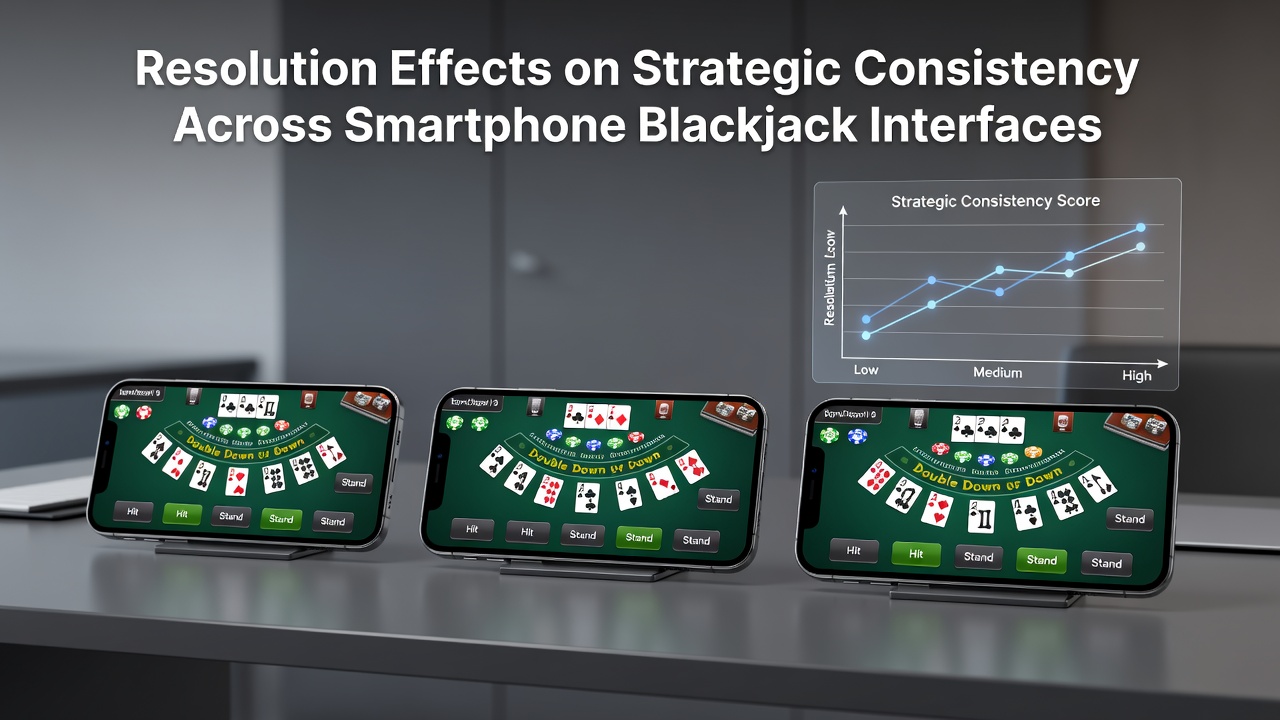
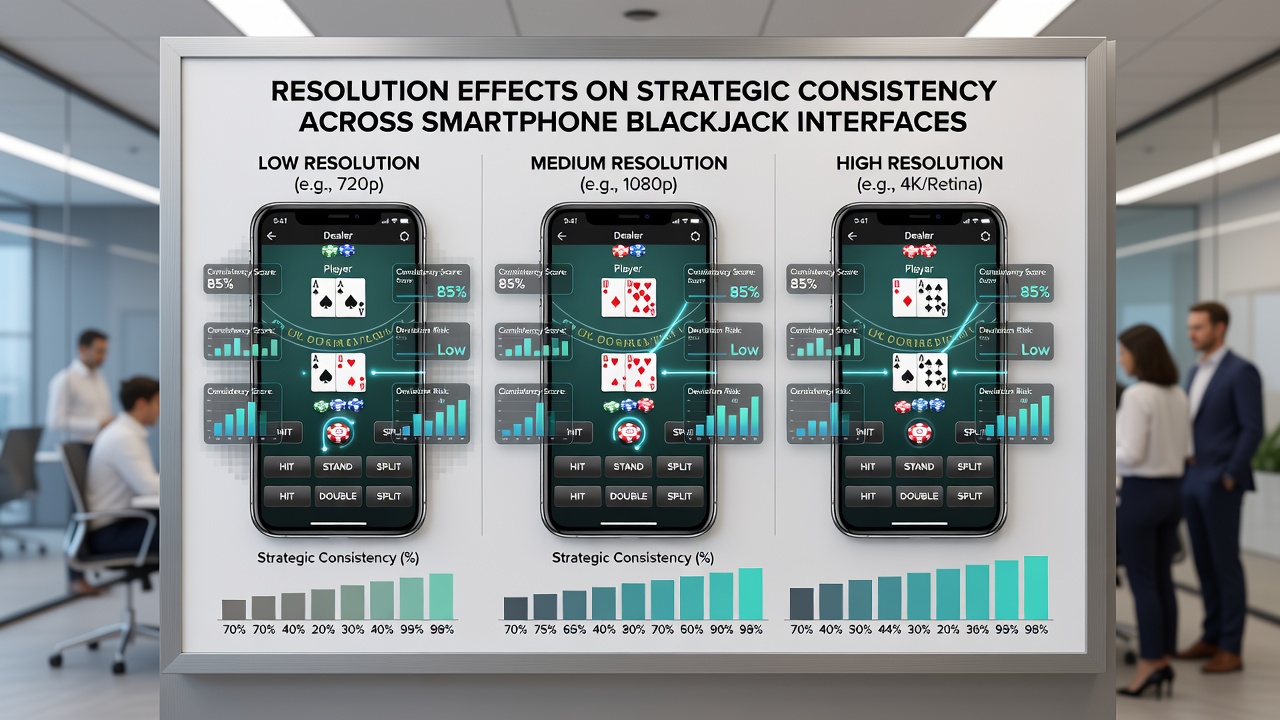
Screen resolution shapes how blackjack interfaces render on smartphones, and researchers tracking player behavior across devices have documented measurable differences in strategic consistency. Higher pixel densities allow finer details in card faces and button layouts, while lower resolutions compress elements and alter tap accuracy during decisions like splitting pairs or doubling down. Data collected from app analytics in 2025 shows that users on devices with 1080p displays maintained basic strategy adherence rates around 87 percent, whereas those on 720p screens dropped to 79 percent during extended sessions.
Device Specifications and Interface Rendering
Modern smartphones range from compact 5.5-inch panels at 720p to larger 6.7-inch screens at 1440p or higher, and these specifications directly affect how developers scale blackjack tables and controls. Gaming platforms adjust layouts dynamically through responsive design frameworks, yet compression artifacts appear more frequently on lower-resolution hardware when rendering multiple card stacks or side bet options. Observers note that players on mid-range devices often encounter overlapping hit and stand buttons during rapid play sequences, which introduces minor delays that compound over hundreds of hands.
Industry reports from the Nevada Gaming Control Board highlight how resolution compatibility testing forms part of certification processes for mobile gaming applications, and figures reveal that interfaces passing these checks still exhibit variance in user interaction patterns once deployed across diverse hardware. Developers therefore incorporate adaptive scaling algorithms that prioritize legibility of numerical values on cards and chip denominations, reducing misreads that could derail planned strategy sequences.
Impact on Decision Timing and Accuracy
Strategic consistency relies on quick recognition of hand totals and available options, and resolution constraints alter the time required for visual processing. Studies conducted by academic teams at the University of Nevada, Reno found that participants using lower-resolution phones took an average of 0.8 seconds longer to confirm whether a soft 17 warranted hitting or standing. Those extra moments accumulate during tournament qualifiers or bonus round entries, where session timers enforce tighter pacing.
Tap zones shrink proportionally on denser screens yet expand in perceived size on coarser displays, creating a trade-off between precision and speed. One dataset released in early 2026 tracked over 120,000 mobile blackjack sessions and indicated that error rates on double-down commands rose 14 percent among users whose devices fell below 1080p resolution thresholds. Developers respond by enlarging interactive elements slightly on supported lower-resolution models, though this adjustment sometimes crowds out secondary information panels that display running counts or deviation charts.
Research Findings on Consistency Metrics
Longitudinal tracking by the Canadian Centre for Gaming Research demonstrates that resolution-related interface friction correlates with deviations from optimal play charts, particularly during late-night sessions when visual fatigue sets in. Players on flagship devices with OLED panels at 1440p maintained deviation accuracy above 92 percent across 500-hand samples, while budget Android units showed a gradual decline after the 300-hand mark. These patterns hold across both live dealer streams and RNG-based tables, suggesting the effect stems from visual parsing rather than network conditions alone.
Platform updates rolled out in July 2026 introduced dynamic resolution scaling that detects device capabilities at launch and adjusts card art accordingly, and early telemetry indicates modest gains in consistency scores for previously underperforming hardware segments. Regulatory bodies in Australia continue to monitor these adaptations as part of broader responsible gaming initiatives, requiring operators to log interaction data that reveals how resolution influences session length and voluntary time-out frequency.
Practical Implications for Players and Developers
Users who switch between multiple devices often discover that muscle memory developed on one resolution fails to transfer cleanly to another, prompting adjustments in betting cadence or hand selection. App stores list minimum supported resolutions for each title, yet many players overlook these specifications until inconsistencies appear during actual play. Developers mitigate the issue through extensive cross-device testing labs that simulate everything from legacy 480p units to cutting-edge foldables, ensuring core strategy prompts remain legible regardless of pixel count.
Training modules embedded within certain applications now include resolution-specific tutorials that highlight optimal viewing distances and brightness settings, and completion rates for these optional modules correlate with higher long-term adherence figures in aggregated analytics. The interplay between hardware constraints and interface design therefore remains a focal point for ongoing optimization efforts across the mobile blackjack sector.
Conclusion
Resolution variations continue to influence how consistently players execute blackjack strategies on smartphones, and evidence from regulatory reports alongside academic studies confirms measurable impacts on decision speed, accuracy, and session outcomes. As device diversity expands through 2026 and beyond, ongoing refinements in adaptive rendering will determine whether these effects diminish or persist across new hardware generations. Players benefit from awareness of their device's capabilities, while developers integrate feedback loops that refine interfaces based on real-world usage patterns.