How Dealer Training Protocols Influence Game Pace and Error Rates in Live Casino Environments
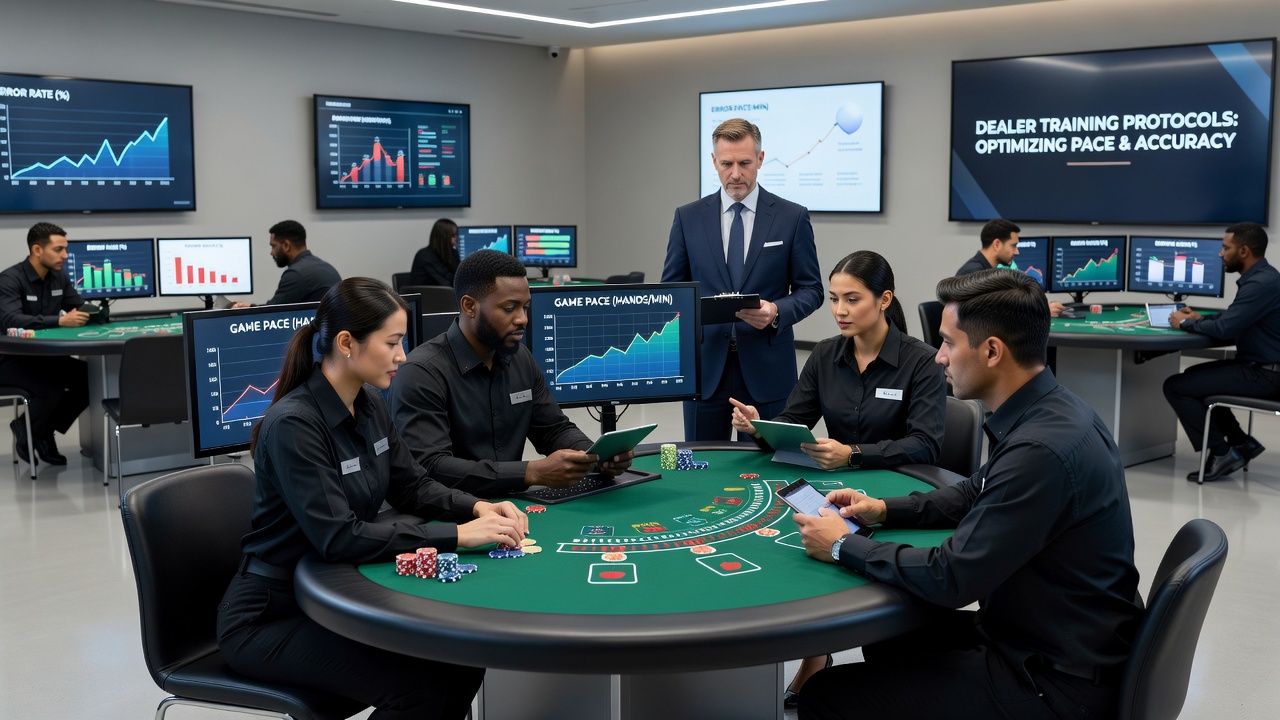
Dealer training protocols establish standardized procedures for handling cards, payouts, and player interactions in live casino settings, which directly shapes how quickly games progress and how often mistakes occur during play. Research from gaming operations shows that structured programs covering shuffle techniques, chip management, and rule enforcement lead to measurable differences in hands dealt per hour alongside reductions in procedural discrepancies. Observers note that casinos investing in extended initial training and ongoing refreshers see consistent patterns where dealers maintain steadier rhythms even during peak hours while minimizing interruptions from misdeals or payout corrections.
Core Elements of Modern Dealer Training Programs
Training protocols typically begin with classroom instruction on game rules followed by supervised floor practice that emphasizes muscle memory for card handling and chip counting, and jurisdictions across North America have refined these modules to include scenario-based drills for high-pressure situations such as disputes or equipment failures. Data collected from multiple properties indicates that programs lasting eight to twelve weeks produce dealers who execute standard procedures with greater uniformity compared to shorter orientations, which allows tables to sustain higher throughput without sacrificing accuracy. What's interesting is how refresher sessions scheduled every six months reinforce these skills, particularly in environments where rule variations like continuous shuffle machines alter the baseline pace expectations for staff.
Effects on Game Pace and Table Throughput
Protocols that prioritize efficient dealing sequences and quick decision-making on payouts contribute to increased hands per hour, with industry figures revealing averages rising from forty-five to fifty-five hands in blackjack when dealers complete advanced modules on timing and flow. Casinos in regions following guidelines from the Nevada Gaming Control Board report that trained staff reduce downtime between rounds by streamlining the collection and distribution of bets, which compounds across multiple tables to boost overall session volume. Yet longer training that incorporates customer service elements can initially slow new dealers until they integrate those skills, creating a temporary dip that resolves once muscle memory takes over. Studies from casino management analyses demonstrate that balanced programs combining speed drills with accuracy checks prevent the trade-off where faster pacing introduces new delays from corrections.
Impact on Error Rates and Procedural Accuracy
Error rates drop noticeably when protocols include repeated simulations of common mistakes such as incorrect payouts or premature card reveals, and longitudinal data from properties in Canada and Australia shows reductions of up to thirty percent in misdeal incidents after implementation of standardized checklists during training. Researchers have observed that dealers who undergo scenario training handle edge cases like insurance offers or split decisions with fewer hesitations, which keeps games moving while avoiding the cumulative effect of small errors that compound into larger disputes. As of June 2026 several multi-jurisdictional operators have rolled out digital tracking systems integrated into training that flag recurring issues in real time, allowing targeted interventions before errors affect table integrity. This approach connects directly to lower variance in daily reports, where properties document fewer instances requiring supervisor overrides or player comp adjustments stemming from dealer actions.
Regional Differences and Supporting Data
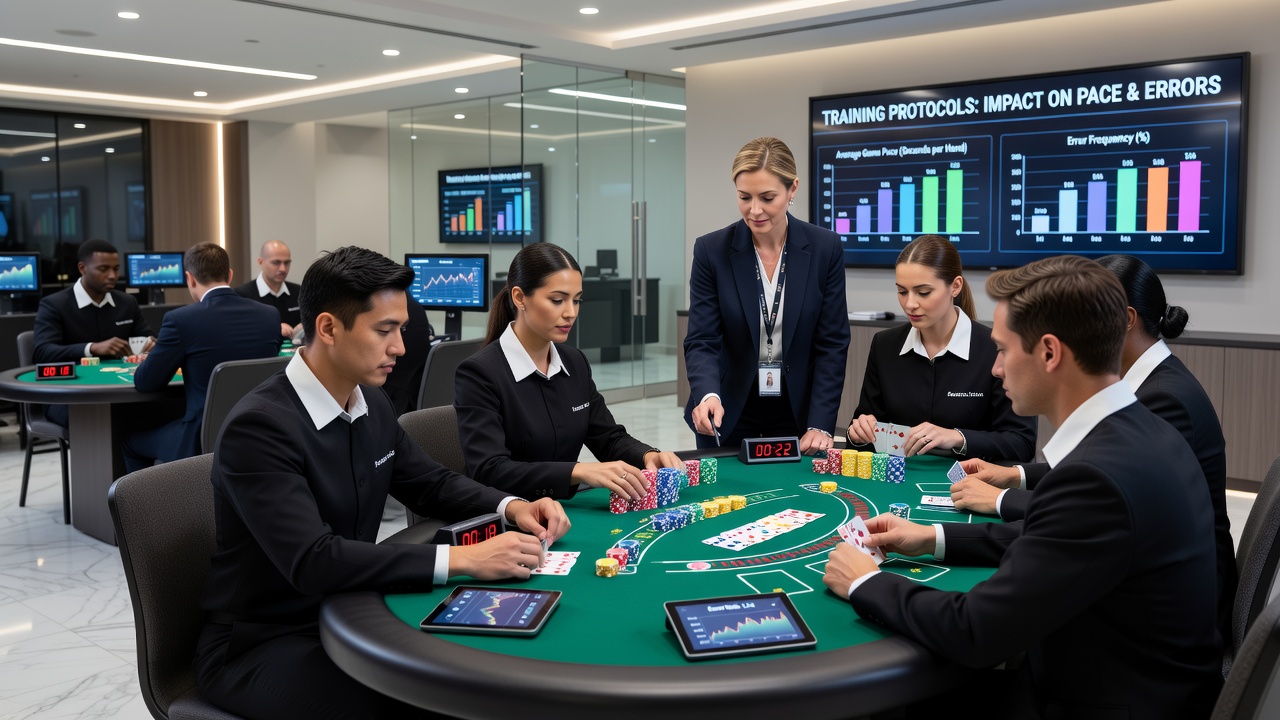
European gaming authorities emphasize multi-game certification in training which broadens dealer versatility but requires additional time investment compared to single-game focus in some U.S. markets, and reports from the Australian Gaming Council highlight how cross-training correlates with stable error metrics even when staff rotate between tables. University-led examinations of operational logs confirm that properties blending classroom theory with extended live practice achieve the most reliable outcomes in both pace consistency and accuracy, particularly when metrics track not just speed but also compliance with local regulatory standards. Those who've analyzed shift reports note that seasonal fluctuations in player volume test these protocols most rigorously, revealing how well-trained teams sustain performance where less prepared staff encounter spikes in procedural lapses.
Conclusion
Dealer training protocols serve as foundational mechanisms that determine operational efficiency and reliability in live casino environments through their influence on both the rhythm of play and the frequency of mistakes. Evidence from regulatory bodies and operational studies across different regions consistently links comprehensive, ongoing instruction to improved table throughput alongside lower error incidence, creating environments where games proceed with fewer interruptions. As training methods continue to incorporate technology and scenario-based elements, the measurable effects on pace and accuracy remain central to how casinos manage daily performance at scale.