Global Certification Pathways for RNG Integrity in Remote Card Platforms: Tracing Lab Audits Through Jurisdictional Approvals to Player Access
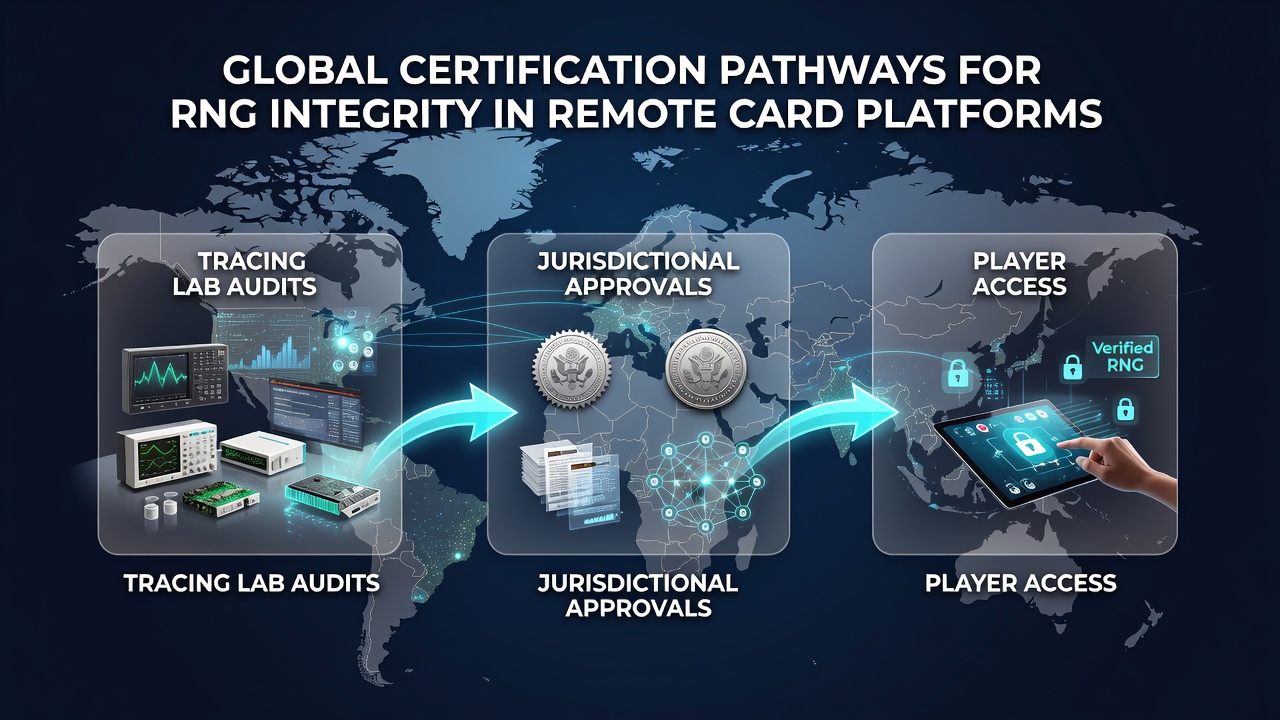
Remote card platforms rely on random number generators to deliver fair outcomes in digital card games, and certification pathways ensure those systems meet technical standards before any player interaction occurs. These pathways begin with laboratory audits that examine algorithm design, entropy sources, and output distribution across millions of simulated cycles. Labs apply statistical tests such as chi-square analysis and serial correlation checks to verify that results remain unpredictable and uniformly distributed.
Initial Laboratory Audits and Technical Verification
Testing facilities conduct controlled evaluations of RNG software and hardware modules, documenting every step from source code review to live deployment simulation. Observers note that independent labs issue detailed reports covering period length, seed management, and resistance to prediction attacks. Data shows these audits typically span four to eight weeks depending on platform complexity and the number of game variants involved. Researchers discovered that discrepancies in early testing phases often trace back to improper reseeding intervals or insufficient entropy collection from operating system events.
Certification bodies require retesting after any code modification, which maintains ongoing compliance rather than one-time approval. Figures reveal that major testing houses processed over 1,200 RNG submissions globally in the twelve months leading to July 2026, reflecting expanded deployment of remote card systems across new markets.
Jurisdictional Approval Processes Across Regions
Once laboratory reports receive sign-off, operators submit documentation to regulatory authorities in each target jurisdiction. Approval workflows differ by region yet follow a common sequence of technical review, policy alignment, and operational inspection. In several Canadian provinces, regulators cross-reference lab findings against provincial technical standards before granting operating certificates. Australian state authorities similarly integrate RNG test data into broader licensing evaluations that include financial stability and consumer protection measures.
European jurisdictions coordinate through mutual recognition frameworks while still conducting localized reviews of audit summaries. Those who've tracked these processes observe that approval timelines range from thirty days in streamlined markets to six months where additional security assessments are mandated. Evidence suggests that platforms targeting multiple regions often sequence submissions strategically, beginning with jurisdictions that accept prior lab certifications from recognized international bodies.
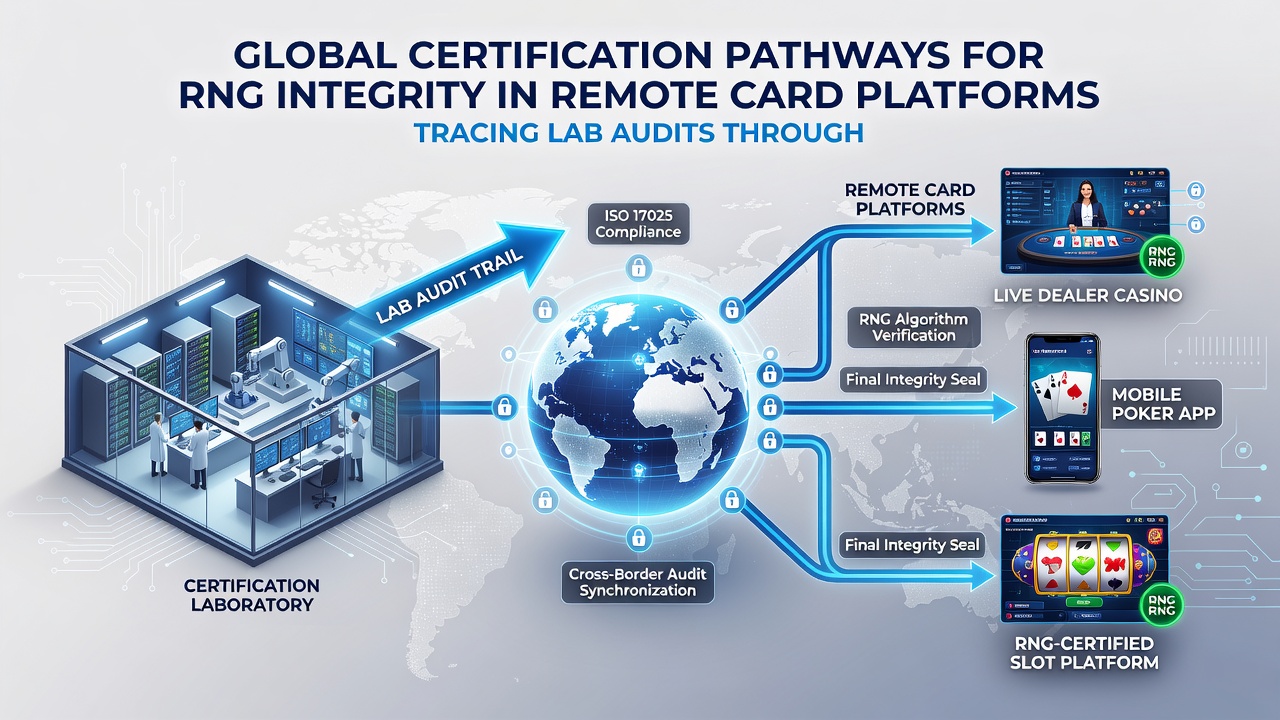
What's interesting is how some regulators now require annual renewal audits even when no software changes occur, creating continuous oversight cycles that extend beyond initial launch. In July 2026, several North American and Asia-Pacific agencies aligned their RNG reporting formats to reduce duplication for operators active across borders.
Integration With Platform Infrastructure and Player Access Controls
Approved RNG certificates feed directly into platform access systems, where operators must demonstrate that certified modules remain active during all player sessions. Monitoring tools log RNG calls in real time and flag deviations for immediate investigation. Gaming associations report that integrated logging systems now capture seed values, timestamp sequences, and outcome verification hashes for post-session audits.
Player-facing interfaces display certification seals that link back to public registry entries maintained by regulatory bodies. Those entries list the testing laboratory, certificate validity period, and game titles covered under each approval. Research indicates that platforms maintaining transparent certification records experience higher session retention rates because players can independently confirm compliance status before committing funds.
Ongoing Monitoring and Cross-Border Data Sharing
Regulatory frameworks increasingly incorporate live data feeds that allow authorities to verify RNG performance without physical site visits. Shared databases between jurisdictions enable rapid identification of certificates that have been suspended or modified in one market. Industry reports highlight that this connectivity reduces the window between detection of anomalies and enforcement actions across multiple regions.
Academic studies on certification efficiency note that standardized data formats accelerate cross-border reviews while preserving each jurisdiction's authority to set additional requirements. The reality is that operators must maintain parallel compliance records tailored to each market's specific formatting and retention rules, even when underlying RNG technology remains identical.
Conclusion
Certification pathways for RNG integrity connect laboratory verification, jurisdictional review, and operational deployment into a single continuous process. Remote card platforms that navigate these steps successfully deliver verifiable randomness to players worldwide. As regulatory coordination improves through shared reporting standards and real-time monitoring, the pathway from audit to access continues to shorten while maintaining rigorous technical standards across diverse markets.