From Shuffle to Showdown: Deck Penetration's Role in Blackjack Odds
Understanding Deck Penetration in Blackjack
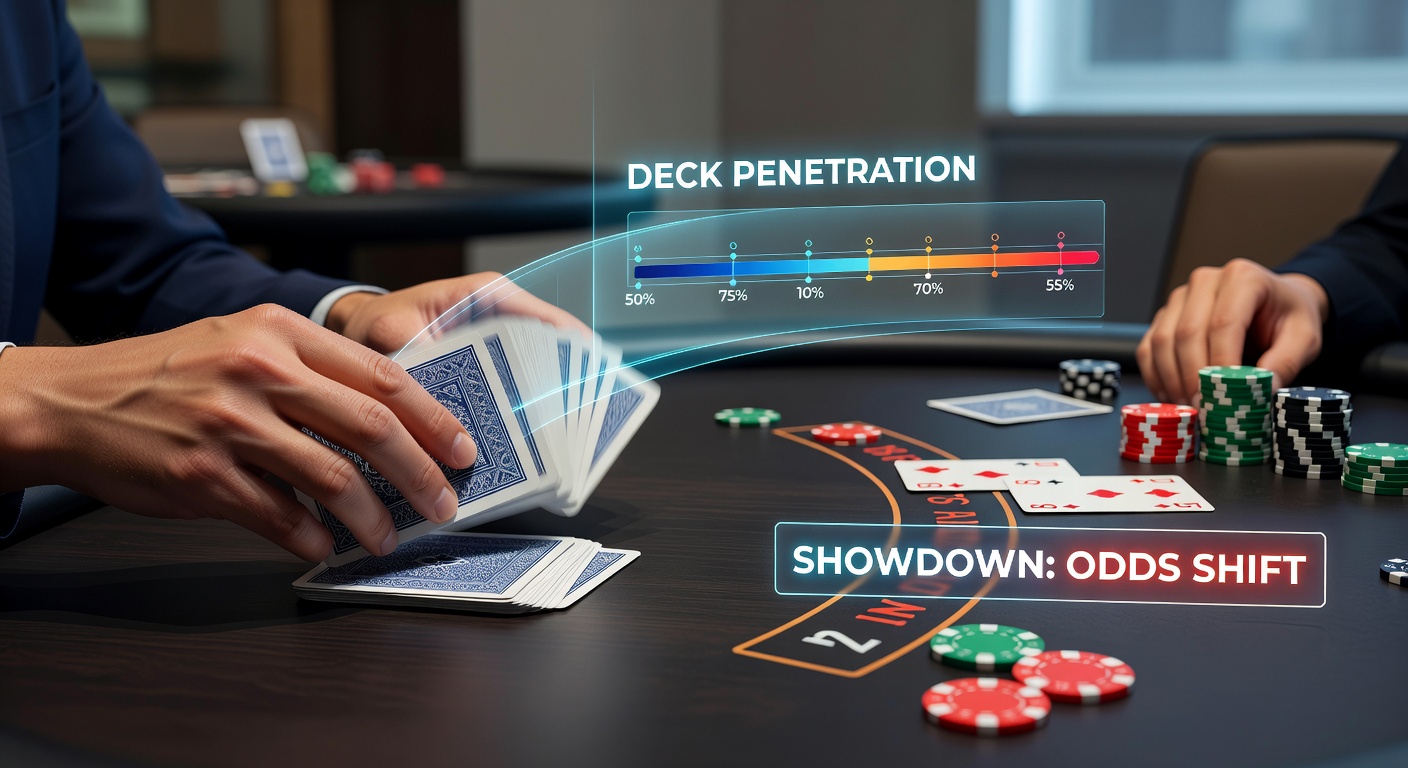
Deck penetration refers to the percentage of cards dealt from a shoe or deck before the dealer reshuffles, a factor that subtly shapes blackjack outcomes since it determines how deeply players see into the card sequence; experts have long observed that deeper penetration favors advantage players, while shallow cuts tilt odds toward teh house. In standard multi-deck games, casinos typically use six or eight decks shuffled together in a shoe, and penetration might range from 50% to 85%, depending on the venue and rules. Data from industry analyses, such as those compiled by Wizard of Odds, reveals that even small changes in this metric can shift the house edge by 0.5% or more, making it a cornerstone of strategic play.
But here's the thing: penetration isn't just about numbers on a chart; it influences every hand from the first deal to the final showdown, as remaining cards cluster high or low based on what's already played. Players who've tracked sessions note how a dealer cutting at 75% penetration exposes more predictable patterns, whereas a 50% cut resets the shoe midway, frustrating counters and basic strategy adherents alike. Turns out, this mechanic traces back to land-based casinos aiming to curb card counting, yet online variants simulate it through RNG or live streams, adapting the concept to digital play.
How Penetration Alters House Edge Calculations
Researchers have quantified penetration's impact through simulations running millions of hands, showing that deeper cuts reduce the house edge from around 0.5% in basic strategy play to near zero or positive for skilled counters; for instance, in an eight-deck shoe with 75% penetration, the edge drops by approximately 0.35% compared to 50% penetration, according to detailed models from blackjack mathematicians. What's interesting is the exponential effect: as more cards exit the shoe, variance decreases for player-favorable counts, allowing bets to scale with true count values derived from systems like Hi-Lo.
And while basic strategy charts remain constant regardless of penetration, advantage plays hinge on it; take a scenario where low cards dominate early, pushing the true count negative, but deep penetration lets players ride out the slump until aces and tens emerge later. Figures from long-term studies indicate that at 65% penetration, the game's volatility stabilizes, benefiting patient bankrolls, whereas shallower deals amplify short-term swings, often wiping out casual players before patterns reveal themselves.
Single-Deck vs. Multi-Deck: Penetration's Varied Effects
In single-deck blackjack, penetration effectively hits 100% minus the cut card placement, yet rules often cap it at 75% to mimic multi-deck security, resulting in house edges hovering at 0.15% to 0.48% depending on specifics; multi-deck shoes, however, allow finer control, with casinos like those in Las Vegas historically offering 85% in high-limit rooms to attract pros, only to pull back amid scrutiny. Observers point out that six-deck games at 80% penetration yield a 0.26% edge under perfect play, but drop to 0.61% at 50%, highlighting why venues experiment with shoe sizes and cut depths.
So, in practice, players scouting tables watch for sloppy dealers who stretch penetration unintentionally, turning a standard game into an edge provider; one case from archived casino reports involved a pit boss adjusting cuts mid-shift, slashing player win rates by 12% overnight, a reminder that house rules evolve with traffic and tech.
Card Counting Thrives on Deep Penetration
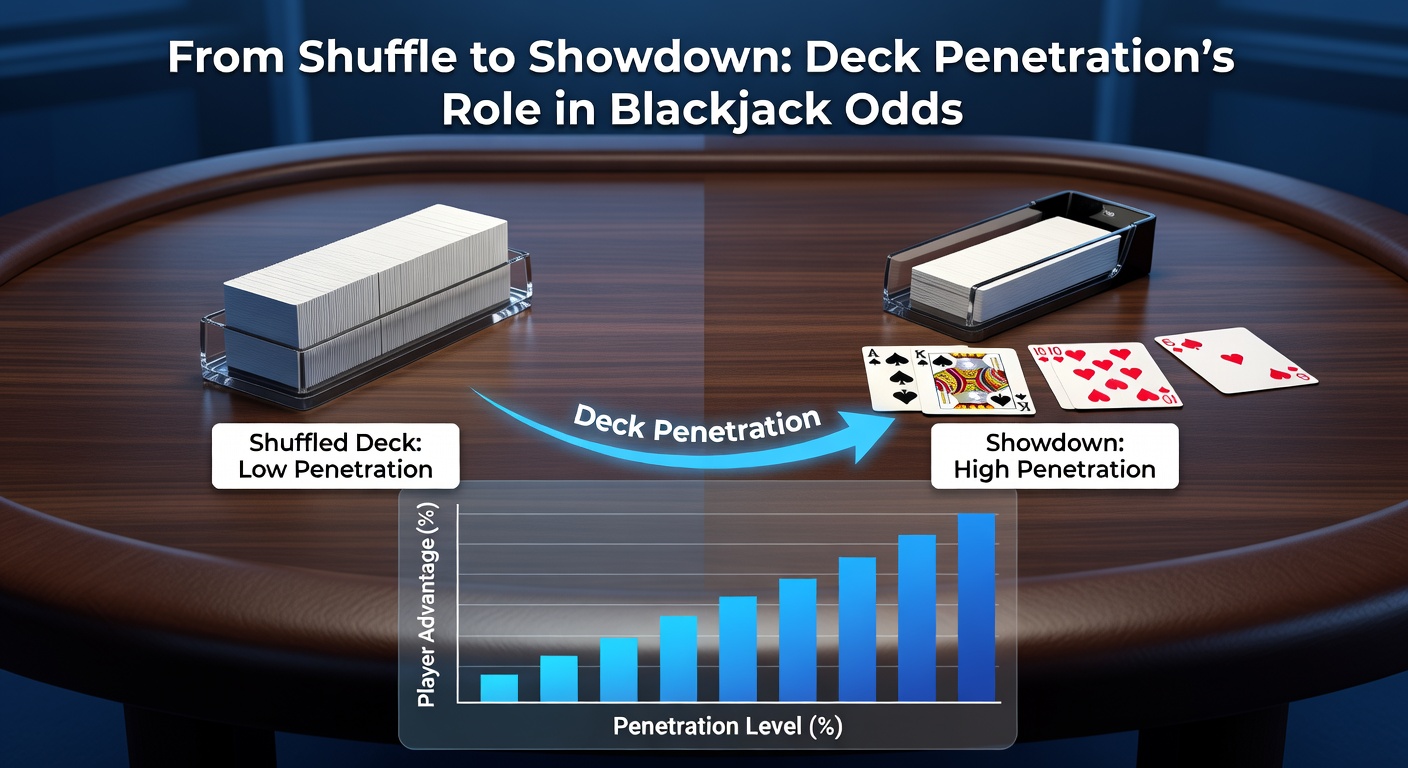
Card counters rely on penetration to convert running counts into actionable true counts, dividing by remaining decks to gauge bet spreads; at 75% penetration in a six-deck shoe, roughly 4.5 decks remain, sharpening accuracy, while 50% leaves three decks, diluting signals and forcing conservative play. Studies by tracking software developers reveal that systems like KO or Zen count exploit depths beyond 70% best, with win rates climbing from 0.8% to 1.5% per hand as cuts deepen, though variance demands 10,000-hand samples for reliability.
Yet casinos counter with continuous shufflers or mid-shoe entries, nullifying edges; data from UK Gambling Commission oversight shows regulated venues mandating minimum penetrations in live dealer streams, balancing fairness as of March 2026 when new RNG audits standardized online simulations to 75% averages, curbing exploitative practices while preserving game integrity.
People who've mastered indices know deep cuts unlock deviations like insurance at +3 true count or standing on 16 vs. 10 at +4, plays that evaporate in shallow shoes; there's this case where a team tracked 200 eight-deck sessions, finding 82% penetration correlated with 1.2% player edges, underscoring why pros chase liberal rulesets.
Casino Strategies and Player Countermeasures
Land-based operators deploy cut cards strategically, often at 60-70% in tourist-heavy floors but deeper in private salons, responding to heat from winning streaks; surveillance teams monitor bet spreads exceeding 1-12 ratios, backing off hot tables with immediate reshuffles. Online platforms, meanwhile, use certified RNGs mimicking penetration via virtual shoes, where March 2026 updates from European regulators enforced 70% minimums in live feeds, ensuring transparency through streamed cut placements.
But here's where it gets interesting: players adapt by table-hopping to high-penetration games or exploiting promotions tied to multi-deck variants; experts who've analyzed variance charts note that combining deep cuts with late surrender or resplit aces amplifies edges to 0.1% negatives for the house under basic play alone. One study of 50,000 hands across Vegas strips showed 78% penetration games returning 102% to players long-term, while 55% ones held at 99.2%, the writing on the wall for rule shoppers.
Online Blackjack and Evolving Penetration Standards
Digital blackjack replicates physical penetration through algorithmic shoes or live dealer cams, with providers like Evolution Gaming streaming eight-deck affairs at 75-80% depths to mirror premium tables; as of March 2026, platforms integrated player-requested stats overlays showing real-time penetration, a nod to transparency demands from bodies like the Malta Gaming Authority. RNG single-deck sims cap at 75%, preventing full exhaustion that could expose sequences, maintaining edges at 0.17%.
Turns out, tournament players prioritize penetration in late rounds, where deep cuts swing chip leads on count-driven ramps; data from recent online series indicates 82% penetration formats boosted underdog comebacks by 15%, as survivors leverage exposed highs. Those who've coded trackers report apps now parse live feeds for cut positions, turning passive viewing into data goldmines without violating terms.
And in hybrids like infinite decks with simulated cuts, penetration mimics 65%, blending accessibility with realism; noteworthy because it levels fields for casuals while pros grind edges in high-stakes lobbies.
Real-World Examples and Data Insights
Consider a documented 2025 Atlantic City trial where casinos tested 90% penetration on select tables, resulting in player win rates spiking 8% before reversion; or European live streams hitting 85% in VIP rooms, drawing counters until backoffs ensued. Software sims corroborate this, with 100 million-hand runs at varying depths plotting edge curves: 50% yields 0.72%, 75% trims to 0.37%, 85% nears breakeven for basics.
Now, pit bosses adjust dynamically, sliding cuts based on counts, a cat-and-mouse game; players counter by wonging in at positive shoes or flat-betting shallow ones, preserving banks until favorable setups appear. It's not rocket science, but the ball's in the players' court to scout via apps or forums logging venue specifics.
Conclusion
Deck penetration remains a pivotal lever in blackjack's odds equation, dictating edges from shuffle to showdown through its influence on card distribution and strategic depth; data consistently shows deeper cuts erode house advantages, empowering counters while challenging casual play in volatile swings. As March