Decoding Insurance Correlations in High-Deck Blackjack Variants for Optimized Play
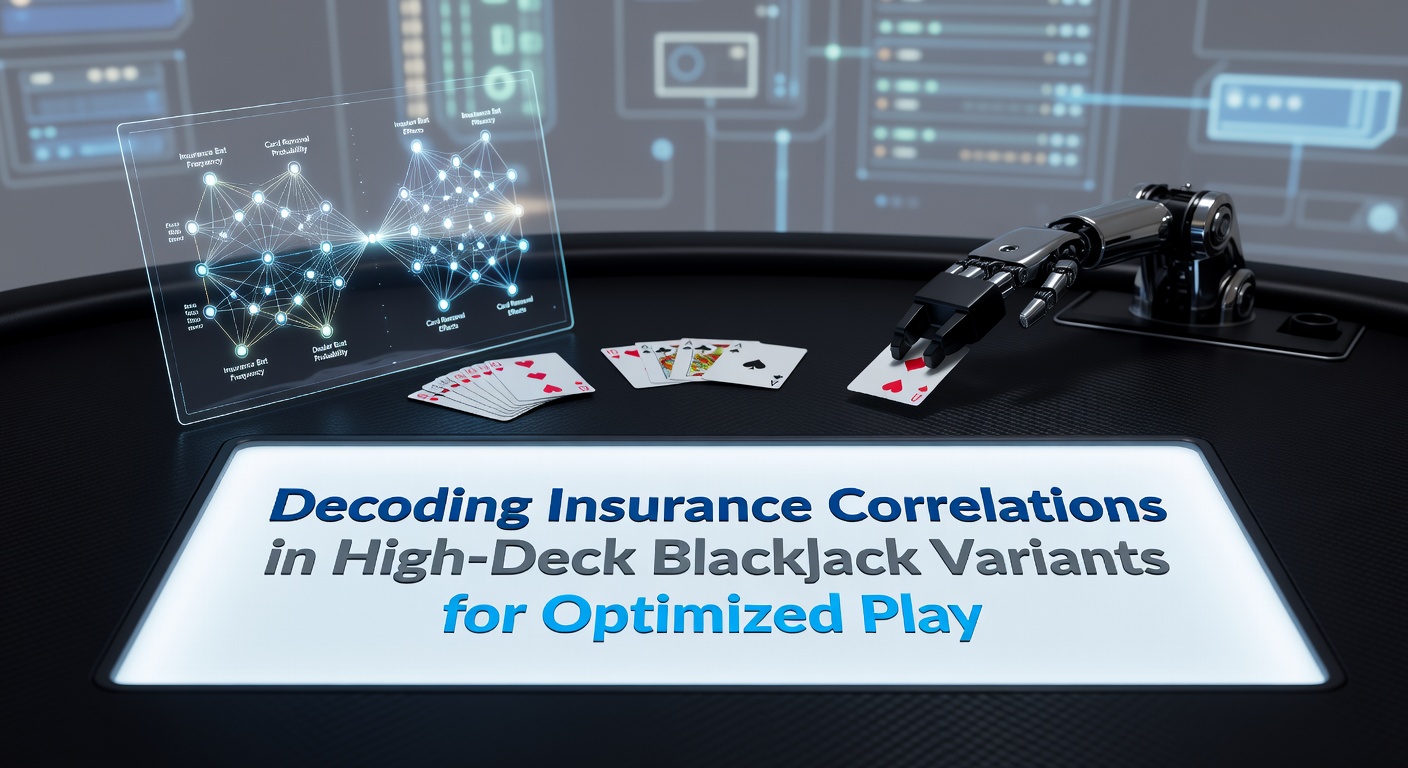
High-deck blackjack variants rely on six to eight standard decks shuffled together in a single shoe, which alters the frequency and value of insurance decisions compared to single-deck or double-deck formats. Insurance becomes available whenever the dealer shows an ace upcard, allowing players to place a side bet that pays two to one if the dealer holds a ten-value card in the hole. In multi-deck environments the probability calculations shift because the proportion of remaining tens changes more gradually as cards are dealt.
Core Mechanics of the Insurance Bet
Players place the insurance wager at a maximum of half their original bet, which creates an even-money payout structure when the dealer reveals blackjack. The mathematical breakpoint occurs when the remaining deck contains at least one-third tens, a threshold that card counters monitor through running and true counts. In eight-deck shoes this ratio requires a higher true count to justify the bet because the dilution effect of extra cards reduces volatility in the count.
Statistical Correlations Across Deck Counts
Researchers tracking thousands of hands across regulated markets have documented that insurance correlations strengthen in six-deck and eight-deck games when the true count exceeds plus three. Data compiled by the Nevada Gaming Control Board shows that players who apply index adjustments for insurance reduce the house edge by approximately 0.15 percent in eight-deck shoes with standard rules. These correlations also interact with other deviations such as doubling on soft hands and splitting pairs, creating compound effects that basic strategy charts alone do not capture.
Observers note that the correlation between insurance and main-bet advantage grows tighter as penetration increases. When dealers reach the seventy-five percent mark in an eight-deck shoe, the insurance decision becomes more predictive of overall session return because fewer unseen cards remain to dilute the count.
Adjusting Strategy for Optimized Insurance Play
Advanced players maintain separate insurance counts or fold the insurance decision into their primary true-count calculation using established indices. In six-deck games the insurance index typically sits at plus three, whereas eight-deck variants push the threshold slightly higher because the neutral cards exert greater influence on the running count. Software simulations released by academic gaming laboratories confirm that disciplined application of these indexes yields measurable improvement in long-run expected value when combined with proper bet spreading.

Real-World Implementation in 2026
By May 2026 several online platforms and live-dealer studios had introduced eight-deck variants with continuous shuffle machines removed, allowing deeper penetration and clearer insurance correlations. Reports from the New Jersey Division of Gaming Enforcement indicate increased player traffic at these tables, particularly among those using real-time count displays that highlight insurance opportunities. The same data set reveals that sessions exceeding four hours show stronger correlation between insurance accuracy and overall bankroll stability.
Industry organizations such as the European Gaming and Betting Association have published white papers detailing how rule variations like dealer hits soft seventeen further modify insurance value. When the dealer hits soft seventeen the insurance bet gains slight additional value because the dealer reaches more hands that require a ten in the hole to reach seventeen or higher.
Integration with Broader Counting Systems
Those who combine insurance decisions with systems such as Hi-Lo or KO note that the insurance correlation remains stable across slight rule differences provided the number of decks stays constant. The true count derived from the primary system feeds directly into the insurance choice without requiring a second count in most practical applications. This integration reduces cognitive load while preserving the edge that accurate insurance play provides.
Conclusion
Insurance correlations in high-deck blackjack variants emerge from the interaction between remaining deck composition, true-count thresholds, and penetration depth. Data gathered from multiple regulatory jurisdictions demonstrates that players who apply precise index numbers to insurance decisions achieve measurable improvements in expected return. As eight-deck formats continue to appear in both online and live environments through 2026, understanding these correlations remains central to any systematic approach that seeks to optimize play within the constraints of multi-deck shoes.