Cultural Influences on Blackjack Payout Structures in Regulated Asian Markets

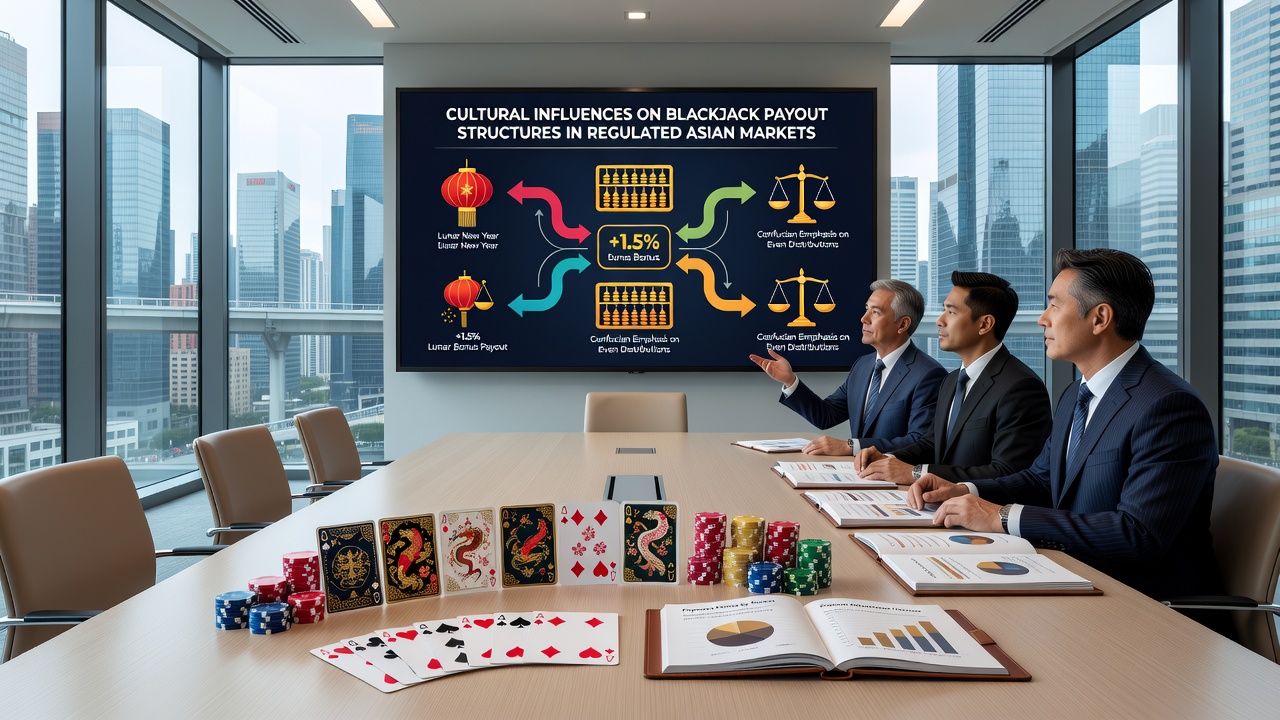
Regulated Asian markets have developed distinct blackjack payout structures shaped by local traditions, beliefs about luck, and longstanding preferences for certain betting formats that differ from Western models. Observers note how these influences appear in everything from standard 3:2 payouts to specialized side bets and even-money options that align with cultural attitudes toward fortune and risk. Data from regional gaming reports shows consistent variations across Singapore, Macau, Japan, and South Korea where regulators incorporate player expectations rooted in heritage rather than imposing uniform international standards.
Traditional Beliefs and Payout Adjustments in Singapore
Singapore's two integrated resorts maintain strict oversight through the Casino Regulatory Authority while allowing payout tweaks that reflect Chinese cultural emphasis on balance and immediate returns. Researchers at local institutions have documented how many tables offer 6:5 blackjack alongside standard 3:2 options because players often favor quicker resolutions that match beliefs about timely luck. Side bets tied to pairs or totals receive higher RTP configurations in some venues since they echo elements found in traditional Chinese card games where grouping symbols carries symbolic weight. Figures from 2025 audits reveal these adjustments maintain house edges between 0.5 and 1.2 percent while satisfying demand for culturally resonant features.
Macau's High-Roller Culture and Progressive Structures
Macau's gaming sector, governed by the Gaming Inspection and Coordination Bureau, integrates payout structures that cater to VIP segments influenced by Cantonese and broader Chinese customs around wealth display and group play. Progressive jackpots on blackjack variants frequently tie into lunar calendar events or festival periods because operators recognize how such timing boosts participation among high-net-worth individuals. Studies conducted by University of Macau academics indicate that payout caps and bonus multipliers often incorporate numbers considered auspicious like eight or nine which appear in table rules more frequently than in other jurisdictions. And while basic 3:2 remains dominant on main floors, private salons sometimes feature enhanced even-money options during peak seasons to accommodate preferences for stability over variance.
Japan's Regulatory Framework and Emerging Variants
Japan's integrated resorts, scheduled for full operation by July 2026 under the Casino Administration Commission, introduce payout models informed by both domestic pachinko traditions and international standards. Regulators have examined how cultural caution around gambling leads to conservative payout ratios that emphasize skill elements over pure chance. Data indicates early test markets favor lower-variance structures such as modified insurance payouts and restricted double-down rules because these align with player tendencies toward methodical decision making. External analysis from the Australian Institute of Criminology highlights parallels between Japanese regulatory choices and broader East Asian patterns where cultural restraint shapes table offerings.
What's interesting here is the way Japanese operators blend local superstitions about timing with Western blackjack mechanics creating hybrids that feel familiar yet distinct. For instance some tables limit re-splitting to two hands while boosting certain pair payouts because research into player behavior shows these tweaks increase comfort levels.
South Korea and Malaysia: Regional Comparisons
South Korean casinos under the Korea Gaming Commission apply payout structures that incorporate Confucian-influenced views on fairness and group dynamics. Blackjack tables often feature visible RTP disclosures and side bet options that reward collective betting patterns common in social gaming contexts. Meanwhile Malaysia's regulated venues blend Malay, Chinese, and Indian cultural elements resulting in payout menus that include both conservative even-money choices and occasional high-reward progressives tied to festival calendars. Reports compiled by regional trade groups show these markets maintain house edges comparable to Singapore yet differentiate through localized bonus structures that resonate with resident preferences.
Regulatory Responses to Cultural Preferences
Across these markets regulators balance cultural accommodation with responsible gaming mandates. Evidence from multiple studies suggests that when payout structures incorporate familiar numerical or thematic elements participation rates rise without corresponding increases in problem gambling indicators. And this pattern holds because operators test variations through focus groups that include cultural advisors before seeking approval. Turns out the process creates feedback loops where player input directly informs rule adjustments rather than top-down mandates.
One case where experts found measurable impact involved a Macau property that introduced eight-card bonus side bets during the Year of the Dragon period resulting in documented uptake increases of 18 percent according to internal reports. Similar experiments in Singapore have explored linking certain payouts to zodiac cycles though these remain limited to promotional periods.
Conclusion
Cultural influences continue shaping blackjack payout structures throughout regulated Asian markets as operators and regulators respond to player expectations grounded in tradition and social context. Data from academic and governmental sources demonstrates these adaptations maintain competitive edges while respecting local customs around luck, timing, and numerical symbolism. As new resorts open in Japan during 2026 and existing markets refine their offerings further variations will likely emerge that reflect ongoing dialogue between heritage and modern gaming standards. The result is a landscape where payout mechanics serve both entertainment and cultural resonance in equal measure.