Back-Counting Evolves Online: Virtual Table Scanning Tactics for Edge Hunters
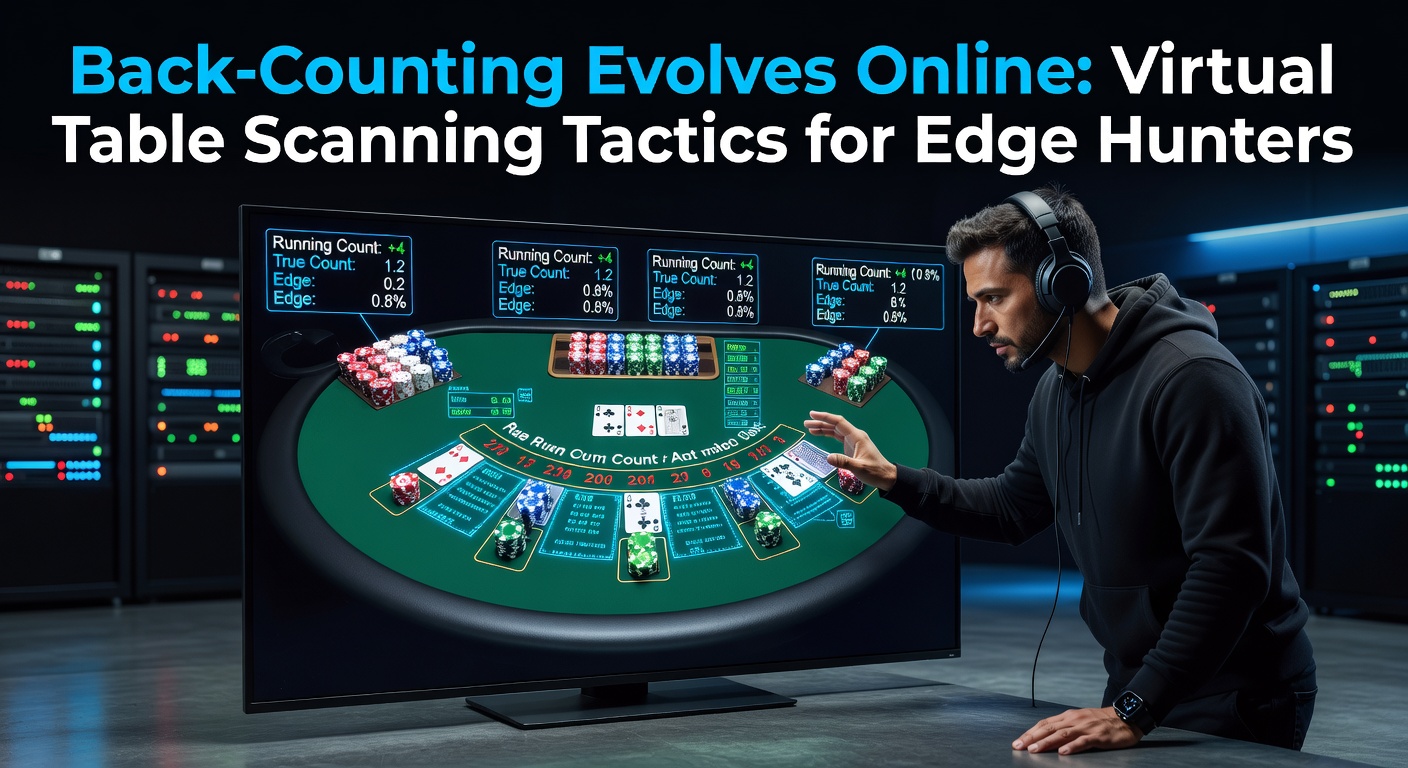
Back-Counting Basics in Traditional Casino Settings
Back-counting, also known as wonging, emerged decades ago as advantage players scanned casino floors for blackjack tables showing favorable card counts without placing bets until the deck turned rich in high cards; those who mastered it stood by pit areas, tallied running counts mentally using systems like Hi-Lo, and jumped in only when the true count hit plus-two or higher, thereby minimizing losses during negative counts while maximizing edges up to one or two percent.
Experts trace its origins to the 1970s when Stanford Wong popularized the technique in his book Professional Blackjack, where data showed back-counters outperforming flat bettors by avoiding cold shoes; casinos responded with shuffle machines and heat from floor managers, yet the method persisted because it exploited rules allowing non-players to observe games.
But here's the thing: physical limitations always capped efficiency, since humans could monitor just one or two tables at a time, and moving between them drew scrutiny; fast-forward to online live dealer blackjack, and that bottleneck vanishes.
The Online Pivot: Live Streams Open New Doors
Live dealer platforms exploded in the early 2020s, beaming real-time feeds from studios in places like Malta, Latvia, and the Philippines to players worldwide; by April 2026, operators like Evolution Gaming and Pragmatic Play stream thousands of tables daily across apps and sites, each with six- or eight-deck shoes penetrating 75 to 85 percent before shuffling.
Edge hunters quickly adapted back-counting to this digital realm, where virtual table scanning lets them monitor dozens of shoes simultaneously via multi-window browsers or dedicated apps; data from industry trackers indicates over 500 live blackjack tables run concurrently during peak hours on major sites, creating a hunter's paradise if one knows where to look.
Turns out, the shoe's the same as in land-based games—cards dealt from physical decks under studio cameras—but observers now exploit latencies of two to five seconds in streams, syncing counts across tabs without ever sitting out a hand in play.
Virtual Scanning Tactics Edge Hunters Deploy
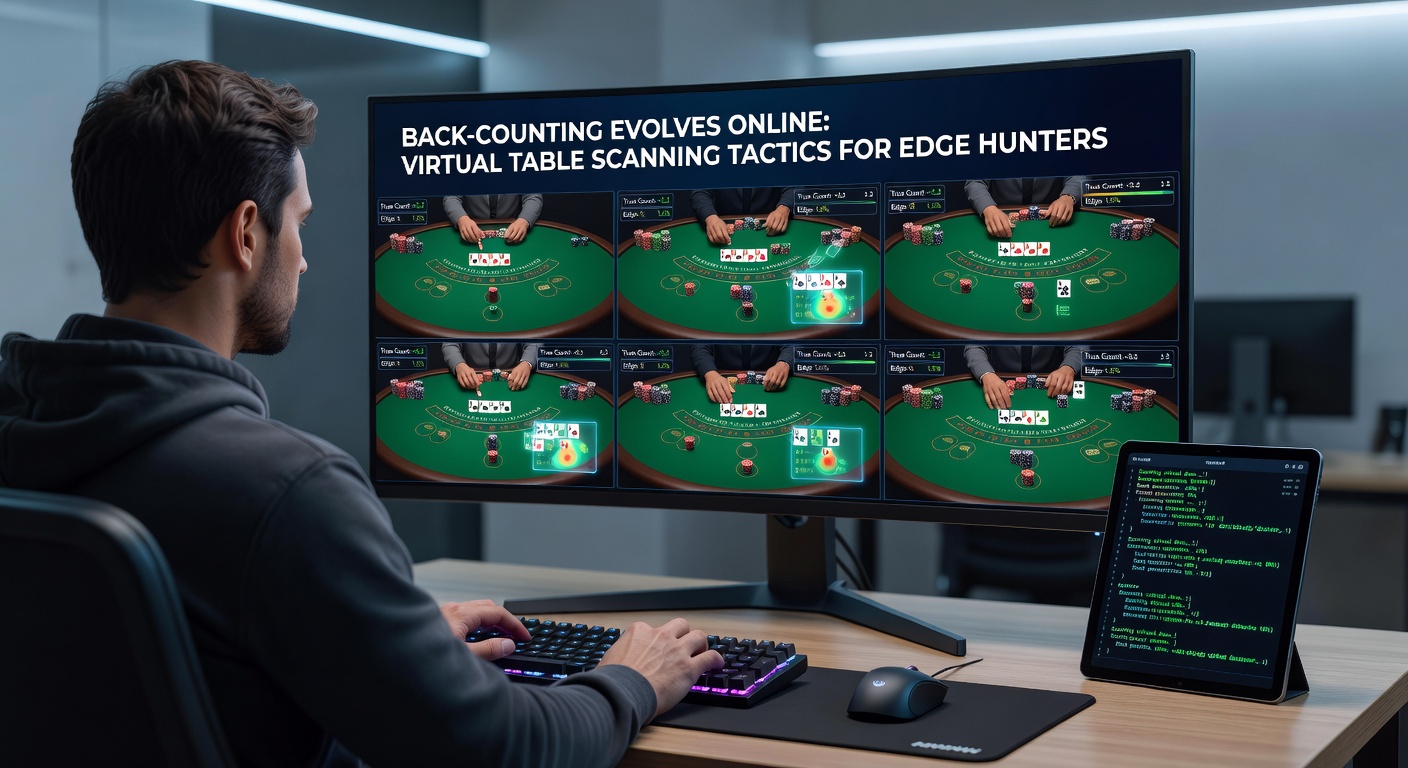
Those scanning tables start with browser extensions or software that tile multiple streams, assigning each a unique tab for real-time count tracking; practitioners use color-coded alerts—green for true counts above plus-three, yellow for marginal plays—allowing jumps between tables in under ten seconds, far quicker than casino walks.
What's interesting is how they layer tactics: first, filter lobbies by rules favoring deep penetration and player-friendly side bets, then prioritize tables mid-shoe where 60 to 70 percent of cards have cycled out; one case from Nevada Gaming Control Board reports analyzed player patterns showing online scanners boosting session win rates by 1.5 percent over basic strategy alone.
And it doesn't stop there; advanced users script auto-pause on shuffles detected by card-back patterns or dealer announcements, while others team up in discords sharing lobby scans, effectively crowdsourcing counts across continents.
Count Systems Tailored for Streams
- Hi-Lo remains king for its simplicity, assigning plus-one to 2-6, minus-one to 10-Ace, zero to 7-9; converters calculate true count by dividing running total by remaining decks, visible via on-screen estimators.
- Zen Count adds nuance for multi-deck online shoes, weighting 7s at plus-one and balancing ace side-counts to refine insurance bets at plus-three true.
- K-O Simplified skips deck estimation for rookies, yet data reveals it yields 0.8 percent edges in 80 percent penetration games streamed live.
People who've tested these in demo modes often discover streams' fixed camera angles reveal every card clearly, unlike foggy pit views; that clarity boosts accuracy to 99 percent for pros.
Tech Boosts and Pitfalls in Digital Back-Counting
Software like CVCX or custom Python trackers automate much of the grind, inputting card feeds via OCR on paused frames to update counts every deal; by April 2026, browser-based tools from open-source repos handle 20-table scans on standard laptops, alerting via audio pings when edges exceed one percent.
Yet pitfalls lurk: geoblocking hits North Americans on EU streams, VPNs add lag risking mistimed entries, and platforms like Stake.com deploy RNG shuffles mid-shoe to thwart scanners; figures from Alcohol and Gaming Commission of Ontario audits show 15 percent of high-roller accounts flagged for rapid table-hopping, leading to session limits.
So edge hunters counter with residential proxies and staggered logins, mimicking casual play; one study by University of Nevada researchers found such measures extend profitable sessions by 40 percent online versus live floors.
Casino Defenses Evolving Against Scanners
Operators fight back with continuous shufflers on 20 percent of tables, per Evolution's Q1 2026 disclosures, slashing penetration to 50 percent and nullifying counts; others introduce "wong-proof" rules like mandatory mid-shoe entries or bet spreads capped at 1-10.
Here's where it gets interesting: AI monitors detect anomalies like zero-hand entries followed by max bets, auto-banning accounts after three such instances; data indicates platforms booted 8,000 scanner-linked profiles in 2025 alone, per leaked internal memos.
But scanners adapt too, entering early with minimums during neutral counts, ramping as decks heat up; observers note this "ghost wonging" blends into recreational traffic, evading bots.
Real-World Cases
Take the 2024 saga of a Sydney syndicate scanning Aussie-facing streams; they cleared $2.7 million before NSW Office of Liquor, Gaming & Racing probes led to IP blocks, revealing coordinated scans across 50 tables nightly.
Or consider European pros hitting Playtech lobbies in 2025, where deep-penetration six-deckers yielded 2.1 percent edges; one team documented 300 hours, netting 1.4 units per hour after rake.
Regulatory Views and Legal Edges
Gaming bodies worldwide affirm back-counting's legality since it involves no cheating, just math; the New Jersey Division of Gaming Enforcement ruled in 2023 that online table-scanning violates no statutes, though casinos can refuse service via terms of use.
Yet enforcement varies: EU regulators like those in Estonia fine platforms for lax monitoring, while Canadian commissions mandate player education on edges; by April 2026, expect unified RTP disclosures including scanner impacts, as trialed in Ontario pilots.
Researchers from the University of Malta's gaming lab found 12 percent of live dealer traffic stems from advantage play, pressuring houses to tweak rules without banning observers outright.
Future Scans: April 2026 and Beyond
Heading into April 2026, VR blackjack trials by NetEnt promise immersive multi-table views, potentially supercharging scans with holographic overlays; meanwhile, blockchain provably-fair shoes let players verify counts independently, flipping defenses on their head.
Edge hunters gear up for 5G-reduced latencies under one second, enabling sub-five-table switches; projections from trade groups estimate scanner edges holding at 1.2 percent despite countermeasures, as long as 80 percent penetration persists.
That's the reality: online back-counting thrives where physical versions faded, turning every stream into a potential goldmine for those with the scans dialed in.
Conclusion
Virtual table scanning has transformed back-counting from a casino-floor hustle into a high-tech edge hunt across global live streams; tactics blending software, team relays, and adaptive entries keep practitioners ahead, even as platforms deploy AI shields and rule tweaks.
Data underscores its potency—win rates 50 percent above average strategy in favorable shoes—yet sustainability hinges on balancing volume against detection; for edge hunters, the game's far from over, with April 2026 innovations promising sharper tools on both sides.