Autoplay Integration Shaping Decision Timing in Smartphone Blackjack Applications
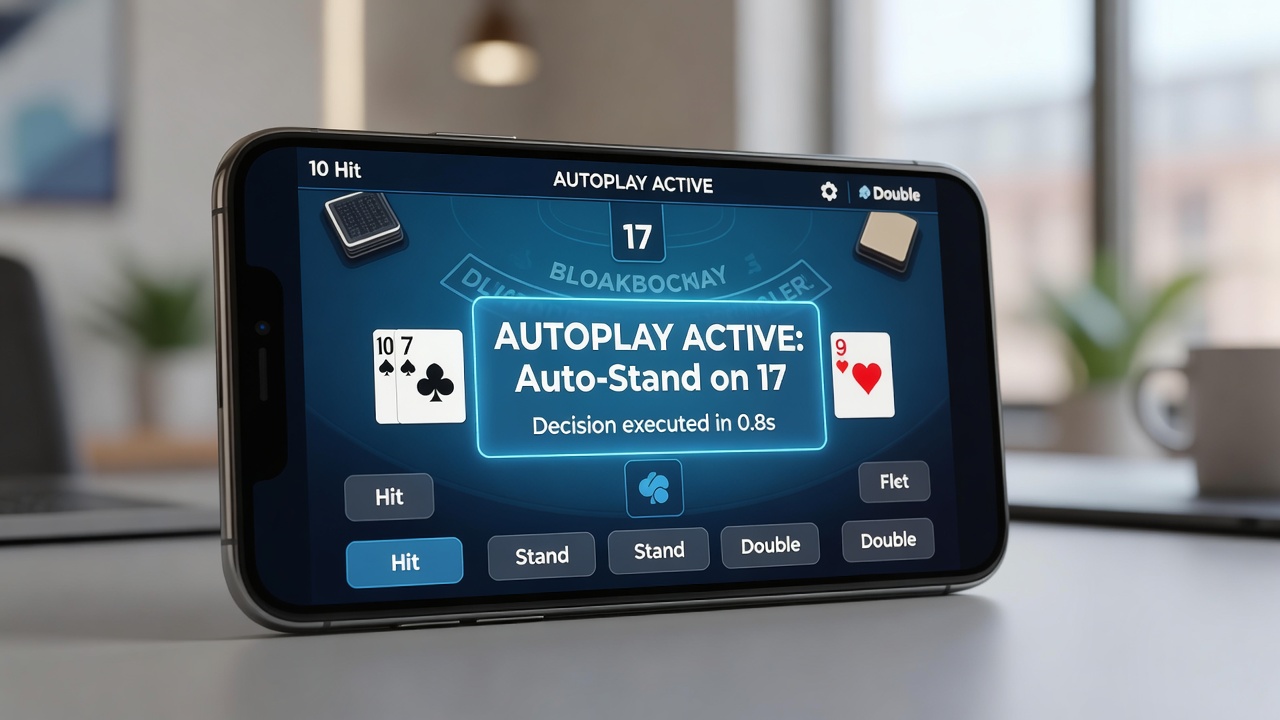
Autoplay functions in smartphone blackjack applications automate certain player actions based on predefined rulesets, and these tools directly alter the intervals between hands while compressing the windows available for manual choices during active play. Developers integrate toggle switches for hit, stand, double, and split decisions that activate once thresholds like hand totals or dealer upcards are met, and this setup reduces the natural pauses that occur when users deliberate over options on smaller touchscreens.
Mechanics of Autoplay in Mobile Interfaces
Smartphone blackjack platforms embed autoplay through layered menus where users select parameters such as minimum hand value for standing or conditions for splitting pairs, and the system then executes these choices without further input once cards are dealt. Interface designers position these controls near the betting area to allow quick adjustments mid-session, yet the automation itself processes outcomes at rates determined by network latency and animation speeds rather than individual user response times. Data from app analytics platforms shows sessions with autoplay enabled complete hands in shorter cycles compared to fully manual modes, because the software bypasses confirmation screens that normally prompt for each action.
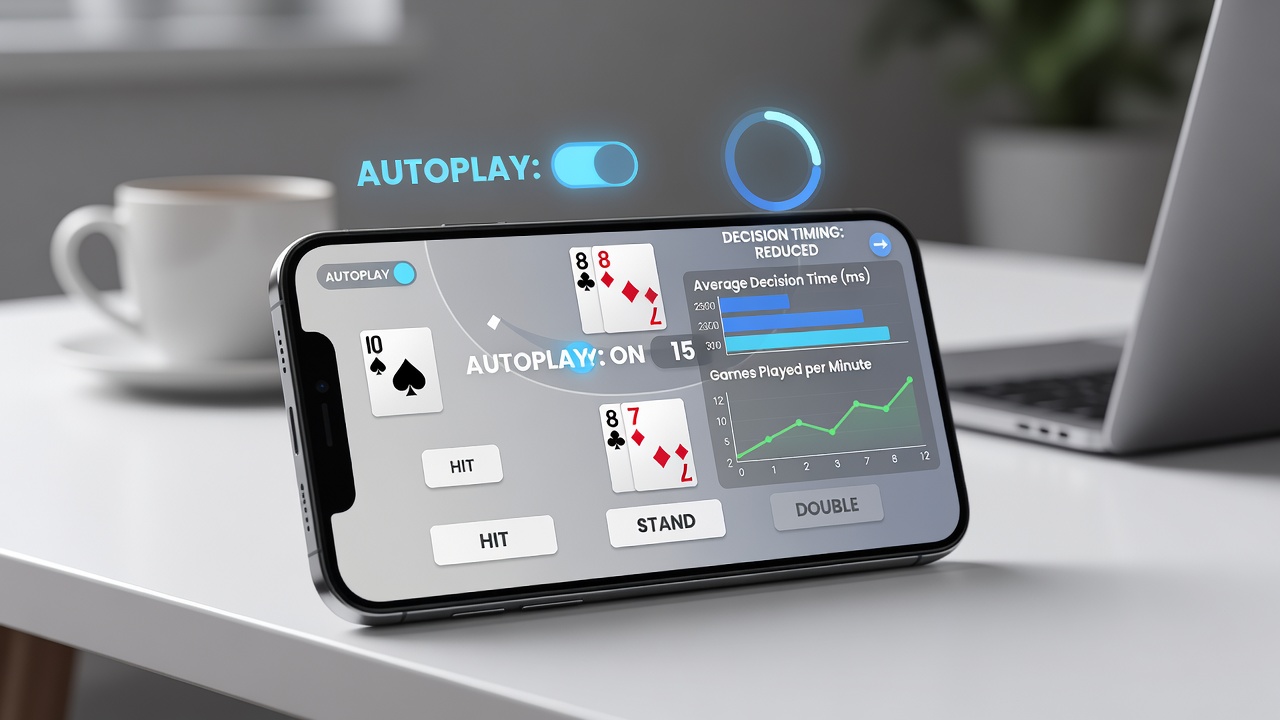
Timing metrics collected across multiple devices reveal that autoplay shortens the average decision window from several seconds per hand down to near-instant execution when rules align with preset criteria, and this shift becomes pronounced on high-refresh-rate displays where visual feedback loops faster. Observers note that touch response variations between operating systems further influence how reliably autoplay triggers, since Android gesture handling sometimes introduces minor delays absent in iOS implementations.
Effects on Player Decision Windows
When autoplay governs routine choices, the remaining manual decisions cluster around edge cases like soft totals or insurance opportunities, which compresses the cognitive load into fewer but more concentrated moments during each round. Research conducted by institutions tracking digital gaming patterns indicates that users who activate autoplay maintain consistent session lengths yet report altered perceptions of pace, as the software handles repetitive actions and leaves only outlier scenarios for direct intervention. This redistribution of timing means players encounter critical choice points at irregular intervals rather than after every deal, and the pattern holds across both portrait and landscape orientations common on modern smartphones.
Studies tracking eye movement and tap frequency demonstrate that autoplay users exhibit fewer total screen interactions per minute, because automated sequences eliminate taps that would otherwise confirm basic strategy moves, and the saved time reallocates to bet sizing or rule reviews between hands. Those monitoring app telemetry observe that sessions extending past thirty minutes show pronounced clustering of manual overrides near shuffle points or when dealer cards trigger insurance prompts, highlighting how autoplay structures the rhythm of engagement.
Platform Variations and Timing Data
Different operators implement autoplay with distinct default thresholds, and these variations produce measurable differences in hand completion rates across competing applications. Platforms that allow granular control over double-after-split conditions or surrender triggers enable users to fine-tune timing more precisely than those offering only binary on-off switches, and the resulting data streams feed into backend systems that adjust animation pacing accordingly. According to reports from the Nevada Gaming Control Board, mobile titles licensed in that jurisdiction must log autoplay usage separately from manual play to support compliance audits, which has generated datasets revealing average decision intervals dropping below two seconds in automated modes.
Cross-device testing conducted by academic groups affiliated with the University of Nevada, Las Vegas shows that autoplay settings interact with battery optimization features on smartphones, sometimes extending intervals when power-saving modes throttle processor speed during extended sessions. This interaction creates regional differences in timing behavior, as users in areas with stricter device regulations encounter modified autoplay responses compared to those on unrestricted hardware.
Regulatory Context and Interface Standards
Agencies overseeing digital gaming in multiple jurisdictions have begun specifying disclosure requirements for autoplay mechanics, and these rules address how timing information displays to users before sessions begin. The Alcohol and Gaming Commission of Ontario, for instance, requires clear indicators of automated decision speeds within app interfaces, ensuring players see projected hand durations prior to enabling the feature. Such standards emerged partly from analyses showing that rapid autoplay cycles can influence session expenditure patterns, prompting requirements for real-time counters that track elapsed time alongside automated actions.
Interface guidelines released in mid-2026 emphasize accessibility adjustments that let users calibrate autoplay sensitivity, including options to insert brief confirmation pauses before critical overrides execute. Developers responded by embedding slider controls that extend decision buffers from zero to several hundred milliseconds, and early adoption metrics suggest these tweaks appear most frequently in applications targeting regulated markets outside the United States.
Future Interface Developments
Engineers continue refining autoplay algorithms to incorporate real-time adjustments based on connection stability, and these enhancements aim to prevent mistimed actions during network fluctuations common on mobile networks. Prototypes tested in controlled environments demonstrate that predictive models can anticipate user overrides and pre-load alternative decision paths, thereby smoothing transitions when manual input interrupts automated sequences. As of June 2026, several major platforms rolled out beta versions of adaptive autoplay that scales timing dynamically according to historical player patterns stored locally on devices.
Integration with wearable accessories introduces another layer, where haptic feedback signals impending automated decisions and allows wrist-based interruptions without returning to the phone screen. This development further fragments traditional decision timing by distributing input methods across multiple hardware points rather than confining them to the primary touchscreen.
Conclusion
Autoplay integration in smartphone blackjack applications systematically restructures the timing of decisions by automating standard moves and concentrating manual choices around exceptions, with measurable effects documented across device types and regulatory environments. Continued refinements in interface design and compliance standards will likely sustain these timing shifts while introducing new variables tied to hardware capabilities and regional oversight frameworks.